Listen and subscribe to us on your favorite podcast platform:


A large portion of an emergency manager’s time is not doing active response. The administrative burden of writing grants, developing plans, reviewing plans, all of those tasks are what takes up a significant portion of time… So where we would say, hey, these smaller jurisdictions don’t have time to go do this [adopt AI tools], the return on investment is almost higher in some of these places.
Jeremy Greenberg, Senior Advisor to Aspen Digital and President of Provincial Strategies LLC
Emergency managers at the local level are being asked to do more with less, and artificial intelligence is arriving faster than the guidance for using it. That tension is especially pressing along the Interstate 10 corridor, one of the most disaster-prone regions in the country, where hurricanes, wildfire, flooding and extreme heat arrive as a matter of routine.
The Markle Foundation and Aspen Digital, a program of the Aspen Institute, have formed the AI for Disasters and Emergencies Initiative, or AIDE, a multi-sector, nonpartisan collaboration working with the RAND Corporation. Its first year of findings, published this month, points to real potential for human-centered AI to help small agencies stretch thin resources, and to the leadership, training and procurement conditions that make adoption work. An adoption playbook, capacity-building pilots and a summit in Austin this September are all ahead.
Jeremy Greenberg, who leads the effort for Aspen Digital, spent twenty-three years in federal emergency management and more than twenty as a volunteer firefighter. He argues the return on AI may be highest in the smallest offices, where one or two people carry grant writing, planning and response on the same desk. He is also candid about the field’s harder problem: nobody, he says, has ever held a press conference to celebrate a disaster that didn’t happen.
In this episode, Greenberg discusses what those findings mean in practice, what the federal shift toward state and local responsibility means for the agencies absorbing it, and where a two-person office should start.
Follow the AIDE Initiative’s playbook, research and September summit at https://www.aideinitiative.org/
Relevant Articles and Resources
- AIDE Summit 2026 (Austin, Texas, September 2026)
- REPORT: “AI for Disasters + Emergencies: A Way Forward” (The Markle Foundation, August 2026)
- REPORT: “Final Report of the President’s Council to Assess the Federal Emergency Management Agency” (U.S. Department of Homeland Security, May 2026)
- “FEMA review signals shift to state-led disaster management” (StateScoop, May 2026)
- “Markle Foundation initiative aims to bring practical AI tools to emergency management” (StateScoop, June 2026)
- The AIDE Initiative — jurisdictions can submit input directly through the site
Relevant Ten Across Conversations Podcasts
- AI Series: 10X Cities Are Using Digital Twins to Solve Complex Problems
- Why the Ten Across Geography Needs FEMA with Dr. Samantha Montano
- AI Series: Balancing Data Infrastructure Resource Demands
- 10X Convergence: The Region’s Experts Convene to Address the Insurability Crisis
Credits
Host: Duke Reiter
Producer and editor: Bryce Cristiano
Research and support provided by: Kate Carefoot, Rae Ulrich, and Sabine Butler
Guest Speaker
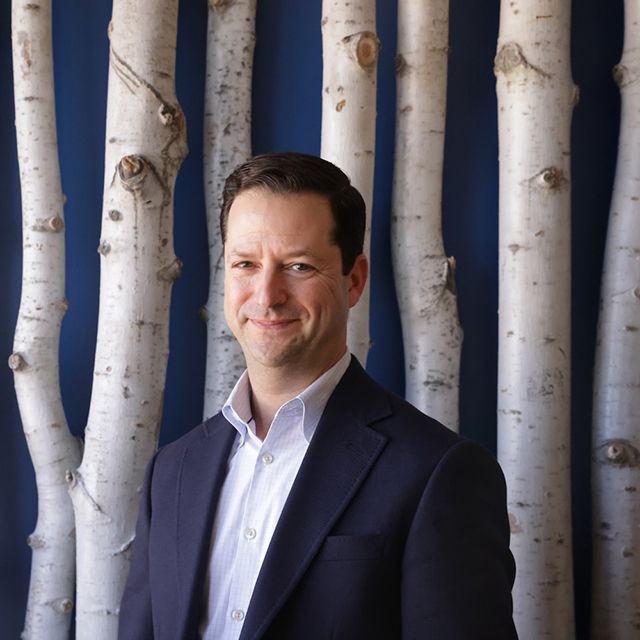
Jeremy Greenberg is Senior Advisor to Aspen Digital, where he leads the AI for Disasters and Emergencies Initiative, and President of Provincial Strategies LLC, an emergency and risk management consulting firm. He also serves as an Adjunct Instructor in the University of Chicago’s Threat and Risk Management Program. He has more than 23 years of federal service, most recently leading FEMA’s Response Operations Division, overseeing the National Response Coordination Center and National Urban Search and Rescue program. He previously served as Chief of the NRCC and FEMA Team Leader for the Domestic Emergency Support Team. He has held roles across the Department of Transportation, Homeland Security, and Congress. Greenberg is a 20-year volunteer firefighter and EMT.