Listen and subscribe to us on your favorite podcast platform:


We need to get better about imagining the future that we actually want, not just imagining the disasters that we’re trying to avoid, but imagining the communities that we’d be excited to be a part of.
Abby Edwards, Senior Deputy Director of Planning and Policy, California Governor’s Office of Land Use and Climate Innovation
I want us to be sober-eyed realists. We are not going to change laws of physics.
Pramod Khargonekar, Distinguished Professor of Electrical Engineering and Computer Science, UC Irvine, and lead editor of California’s Fifth Climate Change Assessment
California’s Fifth Climate Change Assessment, released in October, turns the latest climate science into information communities can act on, covering risks including heat, wildfire, flooding and drought in each of the state’s nine regions. Its key messages end on agency: “The future is not predetermined.” Decisions made today can reduce future harm and help all Californians adapt.
Why it matters: Climate change is already costing Californians. Recent extreme heat events alone have led to billions of dollars in losses through premature death and lost work hours, the assessment reports.
The question: What can one state’s climate forecast show the rest of the country about preparing for the future?
Why here: Ten Across focuses on the I-10 corridor to understand challenges that remain in the future for much of the rest of the U.S. In California, at this region’s western edge, insurance markets already reveal the stakes: average insurance premiums for single-family homes rose 85% (45% adjusted for inflation) between 2020 and 2026, with the sharpest increases in wildfire-prone areas, according to the assessment.
California has published these assessments since 2006, and since 2021, state law requires one at least every five years.
In this episode, Abby Edwards with the California Governor’s Office of Land Use and Climate Innovation and Pramod Khargonekar, UC Irvine distinguished professor and the assessment’s lead editor, join Duke Reiter to discuss who the assessment was built for, how one disaster sets up the next, and what it takes to turn a forecast into action.
DUKE REITER
So Abby and Pramod, thank you for joining us on Ten Across Conversations.
ABBY EDWARDS
Thanks for having us.
DUKE REITER
So we came to this because I read an article in The New York Times, and I think Abby was frequently quoted in it. When I read it, that was about maybe a month ago, and it said the fifth climate assessment for California was being released. And at the time I sort of read it as something defiant, given that the federal government has been closing down climate assessments and things. But now, two days after the election, I’m thinking you all knew exactly what you were doing, and maybe you have set a standard for the rest of the country.
So for our audience, why don’t you start by telling us what a climate assessment is, and especially as California produces one? Abby, we’ll start with you.
ABBY EDWARDS
The first thing I’d want people to understand is just how much of a collective effort producing a climate change assessment is. So since 2023, thousands of people across California have really helped shape the California Fifth Climate Change Assessment. And I really mean thousands. It really was a group effort of researchers, state agencies, local governments, tribal nations, community-based organizations, and practitioners who are working on these issues every day.
So we had a lot of public listening sessions, advisory groups, government-to-government consultation, because we didn’t want this assessment to be something where a scientist produced a report and then handed it over to policymakers. We really wanted the questions being asked and the information being produced to really reflect what communities and decision makers really needed. There’s something really powerful about the fact that this wasn’t only an academic exercise.
I think when you spend time listening to people across California, you realize that the conversation about climate change is really a conversation about the places that people love, the communities that they want to stay in, and the future that they want for their families. And so the result of this effort is a portfolio of more than 60 research and data products, including new climate projections, nine regional reports, topical research, and, importantly, a tribal research component. The assessment itself isn’t the end goal. It’s really the beginning of a much bigger process.
DUKE REITER
And we want to talk about that, how it gets used and what positive impacts you hope it will have. Pramod, talk to us about how you integrate what you hear from people who are experiencing climate change and what you know as an academic and researcher, and the data that you have at your disposal.
PRAMOD KHARGONEKAR
My role in this was as the lead editor. So when Elea Becker Lowe, who works in Abby’s office, contacted me, I jumped at the opportunity. I jumped at it for two major reasons, as to why I took on that responsibility. One was, we knew at the time that there was going to be no national climate assessment. So I felt that there was a heavy responsibility for the state of California to produce as good a quality assessment as humanly possible. We are all human beings. There will always be some mistakes somewhere, and you just can’t avoid that. But I wanted this assessment to be as rigorous, solid, scientifically based, peer-reviewed.
And second, I wanted to serve the state. I wanted it to serve the state of California, which is the citizens of the state of California and their children and grandchildren. So that was my second reason: this had to be something that was not just for scientists speaking to other scientists. It had to serve the people of California. And Abby talked about, you know, how we were focused on community engagement. So a big piece of this climate assessment was working very closely with community, which in California is very diverse. And they were part of the process.
So in almost everything that we did, I mean, there is the pure science, which is just data and so forth. But any time you start talking about what does it mean, what are the impacts, how are people going to adapt, how will we become more resilient? That all involved community. And that, to me, was the service to the state of California.
DUKE REITER
And Pramod, your answer confirms what I said at the very beginning. Given that the national climate assessment had been curtailed by the federal government a few years ago by the current administration, in many ways, when I saw that you were releasing that, that’s why I used the word defiance. You were saying, we will show you what you should expect from a climate assessment. And California has always been out in front with regard to environmental issues. And so you felt an obligation to not only serve Californians, but to be a model for the nation to some extent. Is that a fair way to read that?
PRAMOD KHARGONEKAR
Well, I personally wouldn’t use the word defiance. It’s more responsibility, right? So our assessment is because there is a law in the state of California. Abby’s office does this because there is a state law, and Abby probably knows the number, what state bill governs. So it isn’t as if we said, oh, we are going… You know, there is a law that we are following, passed by the state of California.
So there is the legal basis, requirement for us to produce it. And given that we are going to produce it, the obligation becomes, as an academic, to produce the highest quality, reliable source of knowledge and data and information that people can use with confidence, because it has been done in this really carefully reviewed manner. So except for the word defiance, I would say responsibility, and producing something that is of value to the citizens of California.
DUKE REITER
I like those two words you’re using, obligation and responsibility, to get this right. Abby, you want to add anything to that?
ABBY EDWARDS
We’ve been through two periods of federal retreat under President Trump. California has really demonstrated that climate action doesn’t have to stop when federal leadership changes. And we’ve continued to invest in climate science and support communities and preparing for what’s ahead. Climate change doesn’t operate on the four-year or two-year election cycle. There’s a real opportunity for us to continue, you know, doubling down on our investments and our leadership in this space, and, yeah, be honest about the science and the risks, and also give some people something to work toward.
DUKE REITER
So now we have the assessment. Tell me how I use this. Let’s say I’m a planner somewhere, working for a municipal government, and I want to make sure that resilience is part of what my community is benefiting from. How do I take this very large, comprehensive document and distill it down to what I am trying to do for my community? Maybe, Abby, you start, and we’ll go to Pramod.
ABBY EDWARDS
That question of how we take this incredible science and translate it into better decisions is really core to the work that we do at the Governor’s Office of Land Use and Climate Innovation, or LCI, where I work, because we work at the intersection of climate science and statewide planning and land use and environmental policy. It’s not just what the science tells us, but what does it mean for communities? How do we invest in infrastructure? How can we plan for future conditions? What tools and resources do local governments need?
We have a lot of examples through the Fourth California Climate Change Assessment of ways that the information has been used. And we have that sort of as a model of what it can look like, you know, to incorporate the latest science into those decisions.
PRAMOD KHARGONEKAR
Let me pick up from where Abby is. I think the first thing I would point out is that we have very granular information. So when, you know, people think about climate change, it’s kind of a global thing, right? It’s the shared atmosphere that humanity has. And so it can become very kind of high level and not specific to a geography or area, which is where you started your question. So one of the science pieces that went into producing the assessment was to take the high-level data and downsample it, downscale it to something like a four-mile grid, okay?
So there are nine regional reports. So say the person that you have in mind is, say, in Orange County, California, which is where I am. I’m in urban California. You’re in Orange County, and maybe you’re worried about sea level rise or extreme heat for an elderly community, right? So we have downscaled regional reports. We also have these data products. So it’s not like one and done. It’s not like, okay, here are these reports, just go and use them. No. We have produced, in Abby’s office and other agencies at the state level, data that you can interrogate. You can ask questions of that data and use that to answer your questions.
Yes, there are the reports. There is the peer-reviewed knowledge. You look at the risks that you might be thinking of: extreme heat, wildfires, flash flooding, sea level rise, droughts, agriculture. So we have all these hazards that are climate risks. For each of them, we have detailed analysis of what can happen, what may happen, what is likely to happen.
And then the other piece of our philosophy was, it isn’t that you take science and impose a solution. One thing that is behind everything that’s in this assessment is solutions have to be co-created. So you may be, like, a planner, but you would be working with stakeholders in your community, in your region, on the hazard or on the risk that you are in charge of or responsible for. You work with everybody else who is concerned with that risk and concerned with that aspect of our society, and co-create solutions that are informed by science. So it’s not imposing solutions on the public. It’s building solutions that people will accept as something that’s for the common good.
DUKE REITER
What you’re describing is music to the ears of some people on the Ten Across team. Because if you look at the region that we look at, from California to Florida, it is the most risk-prone area of the United States, which is why, and I think you mentioned it in your report, its application is not just to California. We live right next door to you in Arizona, but what you’re showing in terms of how to understand something, create greater awareness, and then be proactive about solutions with the community could be distributed. In fact, we’ll be in San Antonio, where you talk about flooding in that area, in the Hill Country of Texas, in your report, and how they can benefit from this.
We have a network of chief resilience and heat officers across the 10. And extreme heat is probably the unifying topic. Talk about why something that’s intangible… You don’t see it like a flood or a hurricane, but you can certainly sense it, and it has huge impacts on the environment, on the infrastructure, on human health. Abby, why don’t you talk about the role of heat in your report?
ABBY EDWARDS
Heat is really one of the clearest examples of why this integrated approach matters that we’ve been talking about. As you travel along the I-10 from Los Angeles through Riverside County, Palm Springs, across the Coachella Valley, toward Arizona, you’re really moving through different communities and landscapes, but you’re also traveling through one of the fastest-warming corridors in the country.
People don’t always think of extreme heat when they think of Los Angeles. They think of beaches and a relatively mild coastal climate. But something in the report we’re finding is the Los Angeles region has already warmed about four degrees since the early 1900s, and we’re expecting roughly another four degrees of warming by mid-century. And as you move east into the Inland Deserts, the numbers become even more striking. Many locations in the region already experience more than 160 days a year above 90 degrees. And in parts of the Imperial Valley and Death Valley, temperatures above 100 degrees can occur, I think, roughly for a third of the year.
It’s really hard to internalize what that means for everyday lives. But when you’re someone who’s working in agriculture or construction, that means additional weeks of dangerous working conditions and harder choices about balancing health and income. I think about something as simple as whether my kids can play safely outside, or go to school, or participate in sports in increasingly hot conditions. And it might seem small, but it’s actually a huge part of the quality of life.
Something that gets a little lost when we talk about climate change in terms of degrees of warming: we’re really talking about how people experience their everyday lives. For a family, it means the cost of keeping a home cool. I think one in five people in the Los Angeles region are already energy burdened, meaning they’re spending an unsustainable share of their household income on energy. And for communities, that has implications for energy demand and water supply and transportation and schools and public health, all of those things.
Heat is sometimes talked about as primarily an environmental or weather issue, and we’re really seeing it’s an economic issue, it’s a public health issue, it’s a workforce one, infrastructure. And that’s where, you know, the connection between the science and the planning becomes really tangible, because the science tells us where the temperatures are going, but the climate services can help local governments understand what that means for their particular communities, and then we can translate that into decisions. But I think we also have to think about the bigger picture, about how communities design, as a whole, for the conditions that we’re actually going to experience. And that lesson travels far beyond California. You know, the geography will differ, but the questions about public health and infrastructure and affordability are really across the country.
DUKE REITER
We have tracked the loss of GDP because of work days when it’s too hot to do a variety of things, and that’s a very real condition, which of course affects the economies of local areas. And Pramod, you talk about cascading risk. That’s one of, I think, your areas of expertise. So if it’s really hot, what else happens? Talk about cascading risk.
PRAMOD KHARGONEKAR
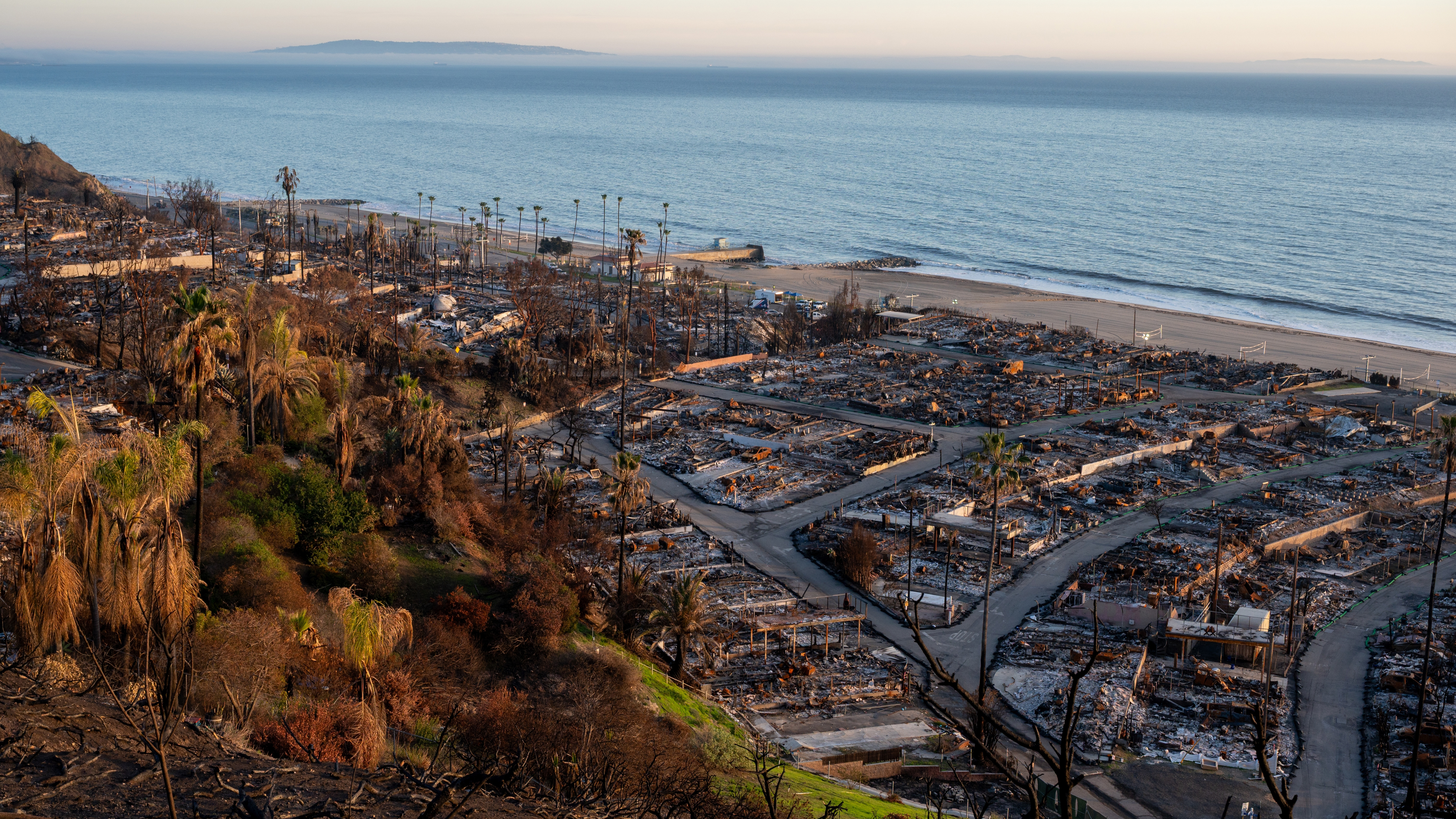
Yeah, I think extreme heat is a very good place to begin with some examples. What we highlighted in these reports is not to view a risk as a single risk by itself, because we think that understates the scope of the problem. So let’s begin with extreme heat. So you have extreme heat, you have very dry conditions, and then that leads to wildfire a few months later, okay? And that wildfire now becomes, like, the Palisades and Eaton wildfires. You can trace it back. I mean, the previous season was extremely hot, very dry conditions, you get the wildfires. Then the soil changes because of the heat and the wildfire. And then when you get rains, you get flooding, because the soil cannot absorb the water.
It’s this sort of cascading of effects. You start with extreme heat, then you get wildfire, then you get flooding, and then it doesn’t stop there, right? So what happens is, because of the fire, you have damage to the housing stock, and you have insurance risks that have gone up. So how do you rebuild? Maybe you don’t have the financial capacity anymore to build up if the insurance is not in great shape. So there is this cascade that begins in a physical manifestation like extreme heat, but it traverses into society and into economy and into our lives, not just today, but for many years to come.
So I think the reports do a really great job of connecting these dots and helping people see that these things are not isolated. And one of the phrases we are using in these reports is climate whiplash. So you go from extreme heat and drought to flooding. And so on average you may be okay, but the extremes are really going to be very damaging. And I think our reports bring out these cascading, climate whiplash type of effects, which are connecting things.
DUKE REITER
So whiplash is certainly an attention-getting word, and I know what you mean. And so it could be for the public, as they’re hearing this or maybe looking at the climate assessment, saying it’s overwhelming, right? The problems seem to be cascading in the way that you’ve described, mounting on one another. How do you make sure that what you’re putting out there doesn’t create, if you will, greater despondency, as opposed to: we need to challenge these things?
PRAMOD KHARGONEKAR
This question is… because I worry about this a lot. A sense of pessimism that it’s all… we are done for, right? I mean, that’s the last thing we want people to take away from this work, okay? And it begins… I use the word sober-eyed realism. So I don’t want us to be pessimistic, but I don’t want us to be optimistic. I want us to be sober-eyed realists. We are not going to change laws of physics, okay? We are not going to change how nature operates, because it’s driven by laws of physics. So you say, okay, these are the trends we are on. We are going to have extreme heat. I mean, Abby talked about the temperature increases all the way from Los Angeles to the Inland Empire and all that.
What we have to say is that’s the reality that we are confronting. What decisions do we make starting today that position us and our children and our grandchildren for a thriving future? I have three grandchildren, okay? What I say is, I’m thinking of them. So when I said yes to playing the lead editor role, I’m not doing it for me. I’m doing it for me, but I really want us to be making decisions that ensure a good future for your grandchildren and my grandchildren. And there we have agency. Working together, we will make decisions to create a more resilient infrastructure.
You know, I think you touched on economy a little while ago, right? I mean, economy is going to play a huge role, because that’s how we are going to pay for some of these added costs. So having a thriving economy, where we are producing value and products and services in the face of the kind of climate risks, I think becomes hugely important. And that’s regardless of your political affiliation. You want a robust economy, which then allows you to pay for managing these risks. So I call it sober-eyed realism, where we recognize that every decision we make… And this is not individual decision. These are almost always group decisions.
So I go back to the example you had in mind, where you are someone somewhere in the state of California who has a job that connects to these questions. What we say is, we have produced this really solid set of reports and reliable knowledge. Use them to make collective decisions that will position our society to be resilient to these climate events and shocks, and create conditions where people can have a good life, you know, have jobs and education and healthcare and all of those kinds of things. Realism, where we have agency.
DUKE REITER
So I think that sober-eyed or clear-eyed realism that you’re describing has been a hallmark of how California has approached its climate and the legislation it’s put in place. And obviously, Abby, you and your work and your office is there. Do you have a sense that that will carry on, which is hugely important, from this administration to the next?
ABBY EDWARDS
It’s a good question. I also want to get a chance to answer what gives me hope and optimism.
DUKE REITER
Abby, what does give you hope and optimism about the future?
ABBY EDWARDS
For me, it’s always about the people. We spend a lot of time working with local governments and tribal communities, and I see an enormous amount of creativity and commitment and real practical problem solving. I think about the future a lot. I’m a mom of three little boys, so it’s not hard for me to think about the world that I want my kids to grow up in, and the choices that we’re making now really shape their lives. And I read recently Rob Hopkins’ book, How to Fall in Love with the Future. And one of the ideas that really has been resonating with me is, we need to get better about imagining the future that we actually want, not just imagining the disasters that we’re trying to avoid, but imagining the communities that we’d be excited to be a part of.
I think the midterms have made that feeling even more tangible. It’s easy to spend our time thinking about risk and loss and things that can go wrong, and those things are really real, and we absolutely have to be honest about them. But I also think we need to give people a reason to believe that the future can be better, and what it would look like to have communities where kids can play safe and outside during the summer, and people have access to clean air.
And that, you know, gets into the role of the continuity with the state and national government and election cycles as well. We absolutely need a strong national foundation in climate science. You know, climate change is a global challenge, and the consistent data and shared methodologies and coordinated research is really important. But as Pramod was also saying, the decisions that actually shape people’s lives are made at the state and local levels. So if we think about housing and transportation and energy, all those decisions are really deeply connected to the geography and the needs of communities.
We’ve seen in California a lot of continuity throughout the administrations, and we’ll see. We have a new governor coming in January 4th. And as Pramod mentioned, with the assessment, having things in statute that require ongoing assessments is really important, because even though administrations change, you have sort of this statutory requirement to continue this work. We’ve seen examples of the federal government rolling things back, but then states continuing to lead the effort as well.
DUKE REITER
So Pramod, if I’m not mistaken, one of the things that Abby said in the piece that I read in the Times was, the future isn’t predetermined. Meaning, take all the science that you’re aware of, all the engineering you’re aware of, but add to it the societal will to do something different than what we’re doing now. How do you think about that, given your perspective?
PRAMOD KHARGONEKAR
I think the first thing I will say is, I’m an engineer. So yes, science tells you laws that govern, but we create the future. I mean, that’s the beauty of engineering: we live within the laws of physics, but we create stuff that’s really, really useful. For example, you know, the headphones you are wearing or the smartphone you are using. There is no law of nature that says there should be a smartphone. But our ingenuity, our creativity allowed us to create these amazing things.
So I come at it from an engineering background. And engineers are really a very important constituency in this whole picture, because there is the science, you know, there is the physical science, the geological science that forms the basis for the phenomena. And then we are problem solvers, right? We create stuff that people like and use, and we serve the needs of the people as engineers.
DUKE REITER
So you’re my new best friend, engineer. So I have a question, an engineering question for you, that impacts us in Phoenix and obviously in Los Angeles. Engineers solve problems, absolutely. And there’s been an inclination in this country to solve problems in a pretty dramatic way. Let’s take the Hoover Dam, a model of engineering, right? How do we get water from where it is to where we need it? Many engineering solutions, and I’m certainly not casting blame on all engineers. I’m an architect by training. There can be later, generationally later, unintended consequences. How do we engineer a better future, not just for the immediate future, but long term?
PRAMOD KHARGONEKAR
To me, that’s a great question. And every time I teach engineering, I bring this out. You can go back in history, right? The Industrial Revolution, one of the greatest achievements that raised prosperity, at least in the Western world but also across the world. It’s a huge achievement, which was powered by engineering. The Industrial Revolution is powered by engineering. But we didn’t foresee… although people knew a hundred years ago there would be warming. This was known way back when, right?
I think we in engineering, first of all, we need to work with people in other disciplines to bring that long-term thinking, to realize that there are feedback effects, right? So if you have a technology and people use it, other things get triggered that don’t yet exist. And I think global warming is a great example of that, right? So you burn fossil fuel, and then you have this phenomenon. I think we can do much better than we have done historically in connecting impacts of engineered solutions when humans start to use them, and bring the economic incentives and bring the social structures into how that’s going to change. And I think the story is not done yet, but I feel like we are teaching our engineering students more and more how you think about the full system approach to building solutions.
DUKE REITER
And I think Abby may have mentioned this in the article, looking at the California tribal nations and how they have worked with the environment, probably in a little less dramatic way than we have brought our engineering skills to it. Do you want to say anything about that, Abby?
ABBY EDWARDS
When we talk about tribal nations, tribal nations aren’t simply experiencing climate impacts or waiting for government to respond. They’re exercising their sovereignty, leading solutions. I think something that we’ve tried to do differently in this assessment was incorporate tribal priorities and research and traditional ecological knowledge as a part of the work itself. It wasn’t something we wanted to tack on in the end. There’s so many examples through the tribal research program, the tribal-specific report, every report uplifting tribal voices and perspectives. And so something that you’ll find is a lot of examples of beautiful, well-thought-out adaptation happening amongst tribes across the state of California that can be real lessons for others, as we’re thinking about not only how do we adapt right now, but how can we learn from things in the past as well.
DUKE REITER
So I want to conclude this because I am talking to two people from California, and we did just have an election three days ago. And I’m really not trying to get into the politics, but I want to build on what this report can suggest we need to do in the future, and maybe a slightly greater degree of optimism about its implementation. But it would seem that the environment for your work, and the way it will be received, is better than maybe it was just 72 hours ago. Do you want to speak to how you think your report will be activated, and your optimism around that?
PRAMOD KHARGONEKAR
Yeah, I want to go back to a conference that was held in Sacramento. So as we rolled this report out, and Abby was the leader of that conference, we had almost 1,500 people from all across California gathered to talk about the reports and what it meant for them and what they were going to do with it. And my take-home message… So I was asked on a panel, what’s your message? And my message was: when you go back and live your regular life and do your regular job, know that there is a source of reliable information, data that can help you make good decisions.
So I come back to the agency question. I really feel like if there is one thing I want people to take away from all this, it’s we have agency. We have agency. Yeah, some things will be very hard, may not be received the way you want it to be received. Climate change can be very abstract, but when you bring people together in a region, it’s very real. And I think that’s the power we have: act locally, with the stakeholders in your region, on the problems that are of importance to that group of people.
DUKE REITER
I think you’re absolutely right. What happens locally really matters. But stepping back, we have found that referring to the concerns that we all have by using geography, that’s what the Ten Across project is all about. And as soon as we describe a problem but link it to a place, we always link issue and place, it snaps into focus for people. It’s not an abstraction anymore.
So, Abby, it sounds like you put together a great event that helped to inspire people like Pramod and others. Why don’t you close us out by talking about what you’re going to do to carry this work forward?
ABBY EDWARDS
The Resilient California Summit was an incredible event. We structured it around three days. So the first was all about exploring the findings from the California Fifth Climate Change Assessment. The second day was all about trying to envision what can we imagine about the best possible future. What are we working toward? And then the third day was really about catalyzing that action. Okay, so now that we have the information, now that we have the vision that we’re trying to work toward, what tangible things do we need to do today to make that happen?
I think [what] a lot of people walked away from that was that hope is not passive. Hope is an active thing that we need to do every day, make decisions in our everyday lives, and be grounded in this shared scientific foundation, for decision makers across all levels. Each of the things that we’re doing and building toward is creating sort of that future vision that we want. And so this assessment gives us that foundation.
There’s been a lot of capacity built up in California around tools to make the climate projections accessible, and maps so people can plan out infrastructure, and, you know, the statute that guides our work. And so I think that there’s a lot to think about, building that capacity within other states and other regions, because, yeah, climate change doesn’t follow jurisdiction bounds. It’s really a regional and geographically tied thing.
DUKE REITER
So I’m going to take you up on that, Abby, literally, because what you just described is the three-day Ten Across Convergence we’re going to hold in San Antonio, which is in the precise middle of the area that we look at, from California to Florida. And it’s that same sequence: reviewing the data that we have on the first day, talking and revealing inspirational precedents that people can learn from, and on the third day, how do I implement that back home, where I’m going? So we can learn from the way you structured that. And I think we need to involve you in it so that you can inspire people in Texas, which now has a lot more in common with California than it did a few days ago.
It has been a pleasure speaking with both of you. And I sort of want to thank The New York Times for publishing the article about your good work that alerted me to it, because of the way you were describing what you want to come from it, and that the future is not predetermined. When I read that, I thought, okay, these are people that I want to talk to. So thank you both so much for your good work and your good spirit.
Relevant Articles and Resources
- REPORT: “California’s Fifth Climate Change Assessment: Statewide Summary” (California Governor’s Office of Land Use and Climate Innovation, October 2026)
- “Latest Climate Report Warns of Major Upheaval to California Way of Life” (The New York Times, October 2026)
Relevant Ten Across Conversations Podcasts
- How Will the Ten Across Region Respond to Findings in the NCA 5?
- What Some of the Hottest Cities on The 10 Are Doing to Address Deadly Heat
- Checking in with Dave Jones on California’s Insurance Outlook
Credits
Host: Duke Reiter
Producer and editor: Bryce Cristiano
Research and support provided by: Kate Carefoot, Rae Ulrich, and Sabine Butler
Guest Speakers
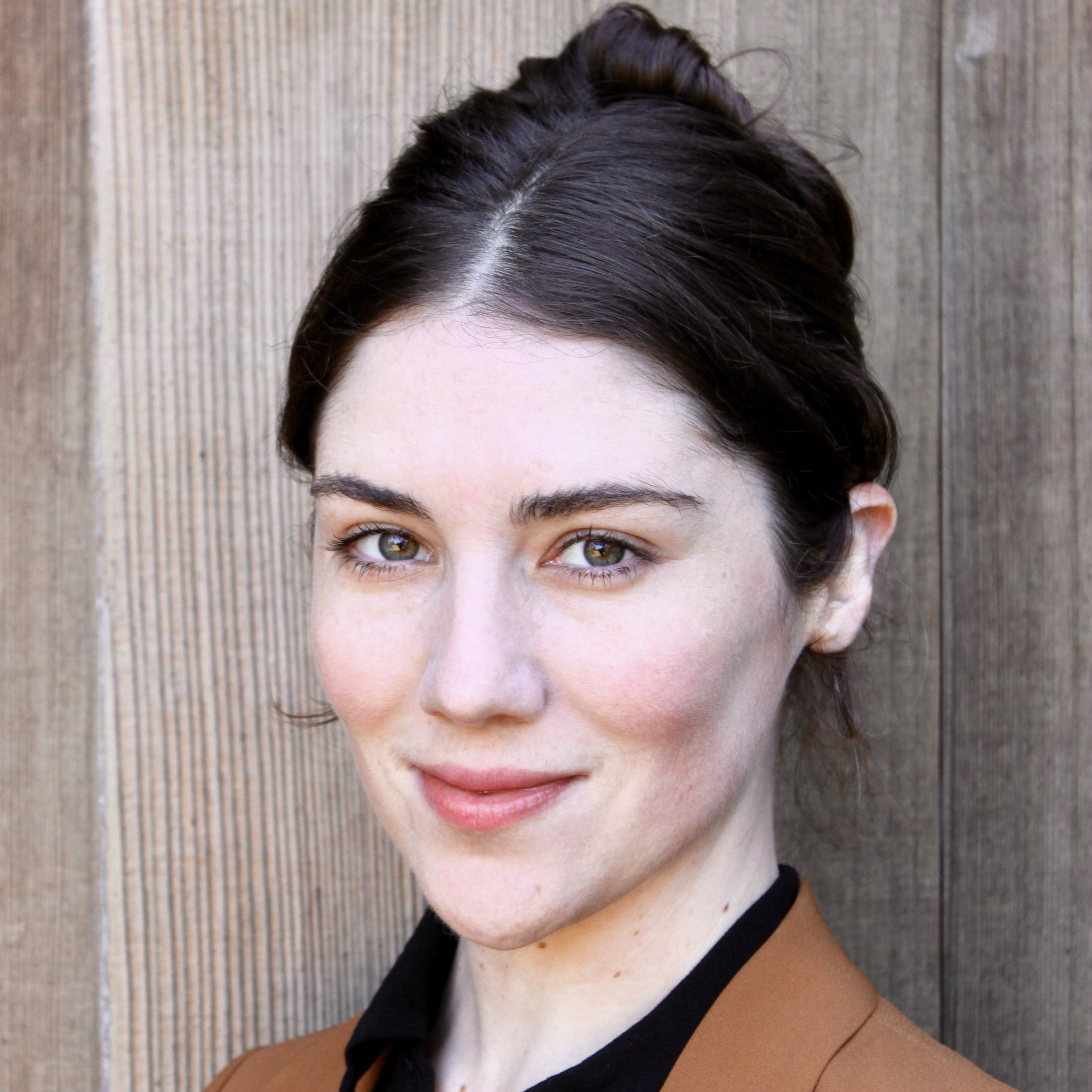
Abby Edwards serves as the Senior Deputy Director of Planning and Policy at the Governor’s Office of Land Use and Climate Innovation (LCI), and Chair of the Integrated Climate Adaptation and Resilience Program (ICARP) Technical Advisory Council. With over a decade of experience in climate adaptation and resilience, Abby has led statewide programs, managed interdisciplinary teams, and fostered partnerships across government, nonprofit, and community sectors. A former Peace Corps volunteer in Senegal and manager of climate-focused service programs at CivicWell, Abby Edwards brings a deep commitment to advancing sustainable, equitable, and impactful solutions to California’s most pressing climate challenges.
What do you think of this:
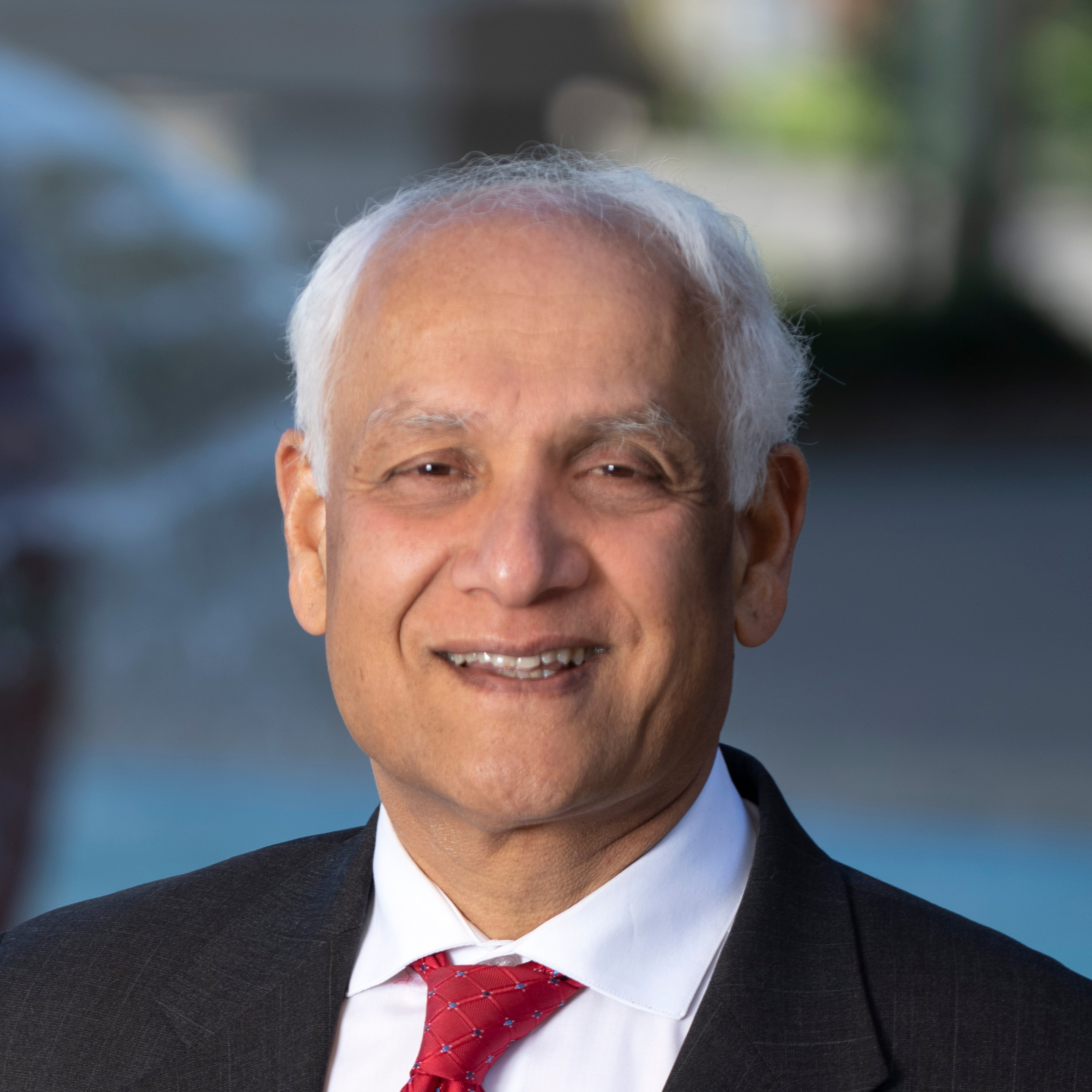
Dr. Pramod Khargonekar is a Distinguished Professor of Electrical Engineering and Computer science at the Samueli School of Engineering at UC Irvine and served as the Lead Editor for California’s Fifth Climate Change Assessment. From 2016 to 2025, he was UC Irvine’s Vice Chancellor for Research. An internationally recognized expert in control systems theory, smart grids, and renewable energy integration, Dr. Khargonekar has held major national science leadership roles, including Assistant Director for Engineering at the National Science Foundation (NSF) and Deputy Director for Technology at the Department of Energy’s ARPA-E.
UC Irvine’s Pramod Khargonekar Leads California Climate Change Assessment | UC Irvine Climate Collaboration posted on the topic | LinkedIn
California’s Fifth Climate Change Assessment is out, and UC Irvine’s Professor Pramod Khargonekar served as its Lead Editor. Pramod is a Distinguished Professor of Electrical Engineering and Compu…