Listen and subscribe to us on your favorite podcast platform:


The foundation of the immigration system and the battles… all of that had been built brick by brick in El Paso, through both Republican and Democratic administrations.
Jazmine Ulloa, national reporter at The New York Times and author of El Paso: Five Families and One Hundred Years of Blood, Migration, Race, and Memory
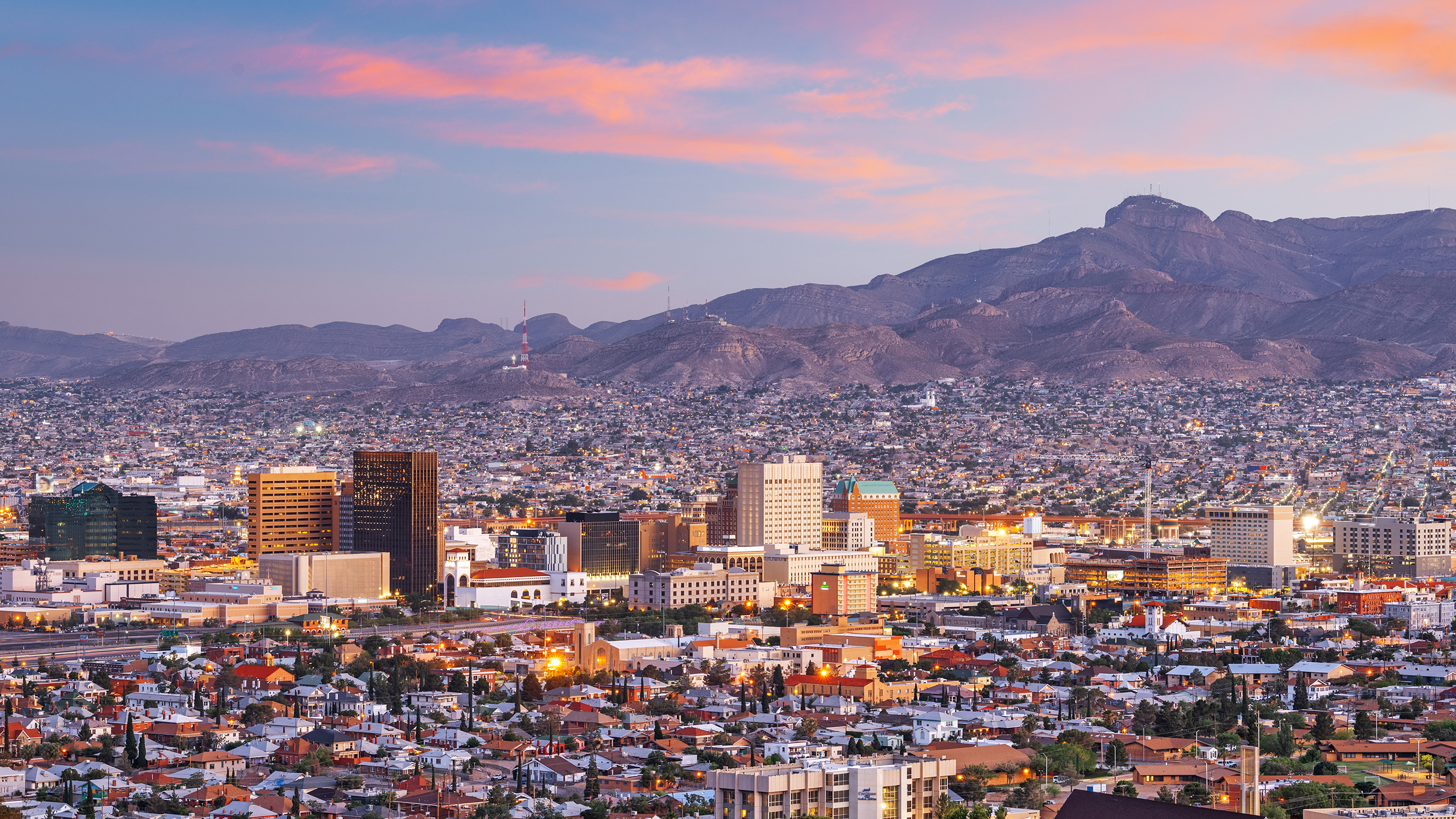
To much of the country, Interstate 10 reaches El Paso on its way to somewhere else, the city seen as little more than a name on a sign between San Antonio and Phoenix, or as a backdrop for whatever border story dominates the news. Yet its position at a key gap in the mountains, El Paso del Norte, has anchored a pivotal crossroads for as long as people have traversed the continent. The city shares a binational life and generations of family ties with Ciudad Juárez, the older settlement on the southern bank of the Rio Grande. The two have been bound together since long before the U.S.-Mexico War placed an international boundary between them, a boundary whose precise course remained contested for decades.
In El Paso: Five Families and One Hundred Years of Blood, Migration, Race, and Memory, New York Times national reporter Jazmine Ulloa returns to her hometown to tell its story through the lives of five families across a century. In that time, El Paso has been a testbed and proving ground for U.S. border and immigration policy, and the lives of its residents chart the complicated motives, successes and failures, from the establishment of the Border Patrol in the 1920s to today’s Department of Homeland Security. It is a history worth understanding now, as the biggest shifts in national immigration policy play out most pointedly along the I-10 corridor.
The book was inspired by a tragedy. On August 3, 2019, a gunman drove to El Paso from the Dallas area and killed 23 people at a Walmart, and later admitted choosing a border city to dissuade Hispanic immigration. Ulloa, then covering national politics for The Boston Globe, was on a plane home within a day. From the memorial that had sprung up in the Walmart parking lot, she could hear the traffic on the nearby Interstate 10. The sound that had once called her to leave became a reason to return, to understand the place she came from. In this episode, she joins Duke Reiter to discuss what she found, why she considers the comparison between El Paso and Ellis Island imperfect yet useful, and why the Ten Across region is such a revealing lens on immigration. This is where migration, enforcement and the question of who belongs are felt first and most intensely. What takes shape here tends to reach the rest of the country. As Ulloa argues, every city is now El Paso.
Relevant Articles and Resources
- El Paso: Five Families and One Hundred Years of Blood, Migration, Race, and Memory
- REPORT: “Border Control: Revised Strategy Is Showing Some Positive Results”
- “Jazmine Ulloa on ‘El Paso: Five Families and One Hundred Years of Blood, Migration, Race, and Memory'”
Relevant Ten Across Conversations Podcasts
- Kyle Paoletta on American Oasis and the Southwest’s Claim on the American Story
- Two Texas Cities Reexamining Data Center Deals, with Robert Moore of El Paso Matters
- Alternative Visions of the Southern U.S. Border Yesterday, Tomorrow and Today
Credits
Host: Duke Reiter
Producer and editor: Bryce Cristiano
Research and support provided by: Kate Carefoot, Rae Ulrich, and Sabine Butler
Guest Speaker

Jazmine Ulloa is a national reporter for The New York Times. She previously reported for the Los Angeles Times and The Boston Globe, where she was part of a team that won the Toner Prize for Excellence in Political Reporting. A native of El Paso, she started out as a journalist in Texas, where she worked for newspapers in Brownsville, San Antonio and Austin. She has made appearances on MSNBC, CNN and CBS, as well as in Al Jazeera’s documentary television program Fault Lines.