The Colorado River has entered a defining moment. With the seven states in the basin unable to reach consensus about how to share the pain of Colorado River water cutbacks, the federal government will release its own plan—one that will bring significant change. This plan will shape water allocations for decades, affecting more than 40 million people, agriculture industry, energy production, tribal communities, economic development, and the long-term resilience of the American Southwest.
At its core, Ten Across is concerned with our collective ability to recognize and respond to knowable futures before they become inevitable crises. The Colorado River’s long decline demonstrates again that even with decades of foresight, institutions and communities often struggle to appropriately prepare. This very human gap between knowledge and collective action extends well beyond water issues to shape a variety of critical, long-term trendlines seen in this region.
Here is a selection of recent 10X Conversations with executive director Duke Reiter and leading experts in hydrology, policy, planning and resource management, offering essential context for the difficult choices. Together, these discussions demonstrate that the Colorado River’s future is not simply a story about drought. It is a story about governance, science, economic development, infrastructure, equity, and the need to find consensus in order to build resilience across one of the nation’s most consequential regions. As policymakers, water managers, business leaders, researchers, and communities respond to the forthcoming federal framework, these episodes offer compelling insights into the challenges—and opportunities—that will define the next chapter of the Colorado River Basin.
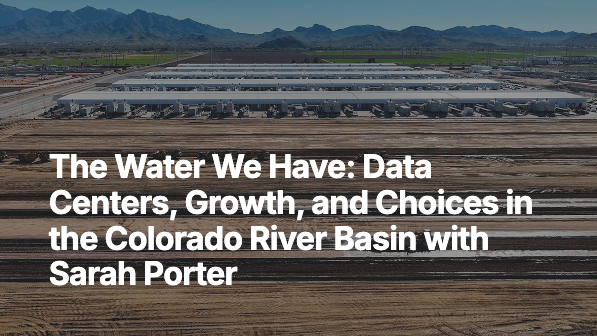
The Water We Have: Data Centers, Growth and Choices in the Colorado River Basin with Sarah Porter examines how expanding industries, technological innovation, and continued population growth are reshaping conversations about water availability and long-term planning. [Listen In]
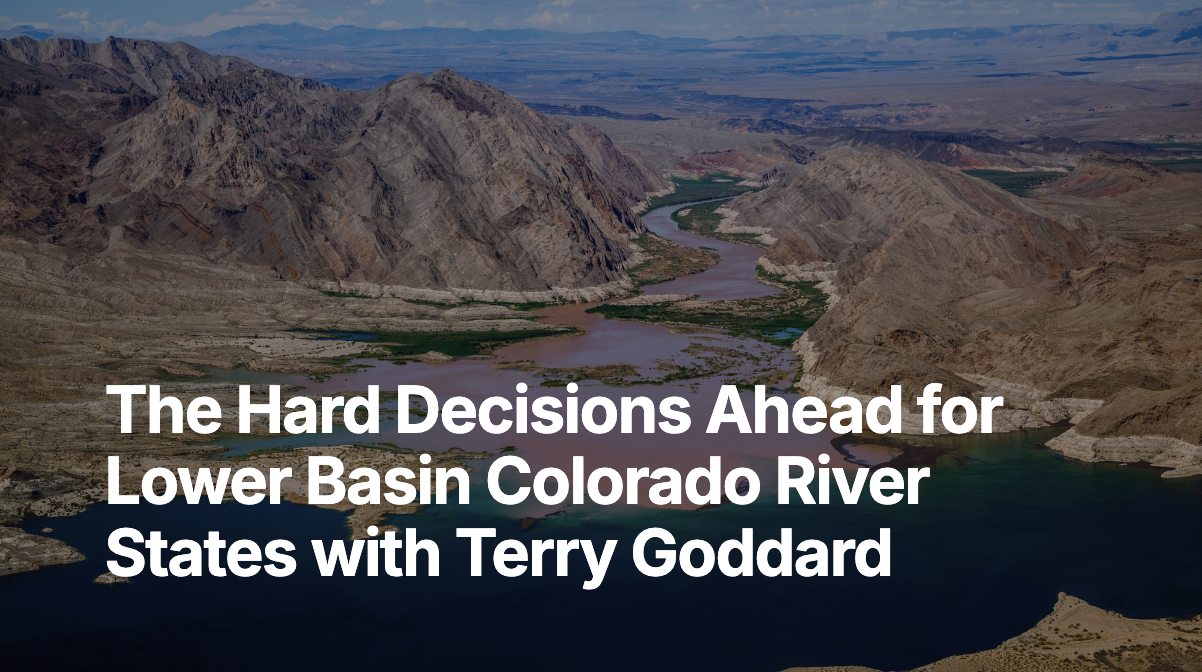
The Hard Decisions Ahead for Lower Basin Colorado River States with Terry Goddard explores the complex negotiations, governance challenges, and collaborative approaches needed to develop a more sustainable future for the river. [Listen In]
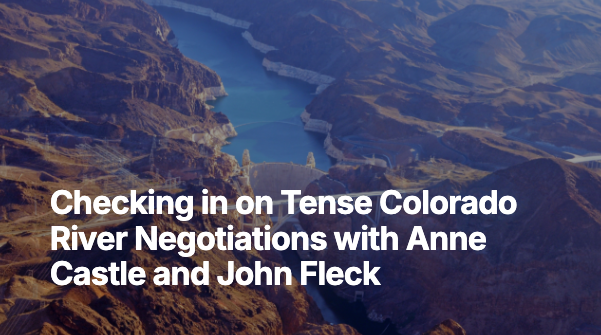
Checking in on Tense Colorado River Negotiations with Anne Castle and John Fleck provides insight into the evolving discussions among basin states and the institutional frameworks guiding one of the nation’s most consequential water policy decisions. [Listen In]
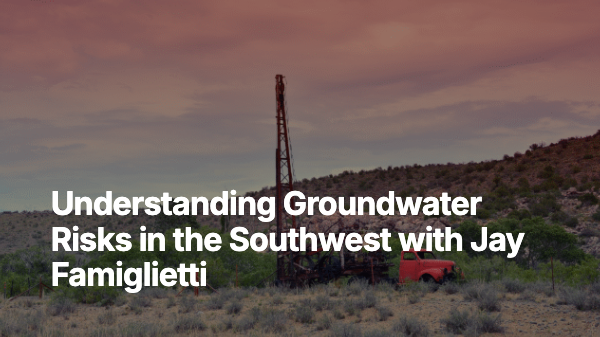
Understanding Colorado River Basin Groundwater Resource Risks with Jay Famiglietti highlights the critical relationship between groundwater and surface water, underscoring the importance of integrated resource management as communities prepare for a more variable future. [Listen In]
Guest Speakers
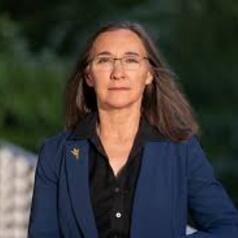
Sarah Porter is the Director of the Kyl Center, bringing extensive expertise in Arizona’s water policy and conservation. With a background in environmental leadership, she advocates for innovative solutions to ensure long-term water sustainability. She has a deep understanding of Arizona and regional water issues, having led Audubon’s Western Rivers project, a multi-state initiative focused on raising awareness of challenges to Colorado River sustainability.
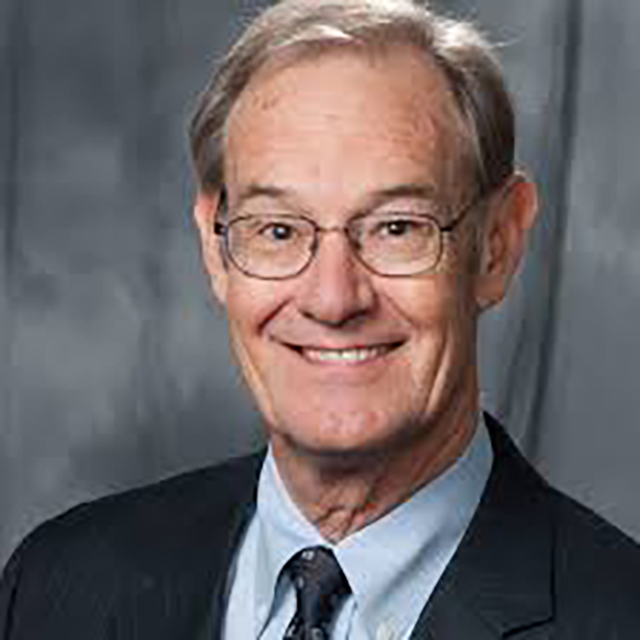
Terry Goddard served as Arizona attorney general from 2003 to 2010, addressing major issues, including the fallout from the mortgage crisis, border security, and consumer and environmental protections. While mayor of Phoenix from 1984 to 1990, Terry conceived and presided over the Phoenix Futures Forum, the largest city visioning process in the U.S., measured by the number of citizen participants and scope. He was also elected president of the National League of Cities in 1988. Today, Terry is serving his third term as president of the Central Arizona Water Conservation District Board, which oversees the Central Arizona Project.

Anne Castle is a senior fellow at the Getches-Wilkinson Center for Natural Resources, Energy, and the Environment at the University of Colorado Law School. She is a founding member of the Water Policy Group and co-founder of the initiative on Universal Access to Clean Water for Tribal Communities. From 2022 to 2025, she served as U.S. Commissioner and Chair of the Upper Colorado River Commission and was Assistant Secretary for Water and Science at the U.S. Department of the Interior from 2009 to 2014.

John Fleck is a writer in residence for the Utton Transboundary Resources Center and professor of practice in water policy and governance at the University of Mexico’s Department of Economics. He is also the co-author of Science Be Dammed: How Ignoring Inconvenient Science Drained the Colorado River and author of Water is for Fighting Over and Other Myths about Water in the West. John is the former director of the University of New Mexico Water Resources Program, where he continues to teach and advise graduate students.

Jay Famiglietti is a Global Futures professor at Arizona State University’s School of Sustainability, director of science for the Arizona Water Innovation Initiative, and associated faculty in the School of Sustainable Engineering and the Built Environment and the Swette Center for Sustainable Food Systems. Previously, Jay was executive director of the Global Institute for Water Security at the University of Saskatchewan and a senior water scientist at the NASA Jet Propulsion Laboratory at the California Institute of Technology. He has served on the California State Water Boards in the Santa Ana and Los Angeles regions.