Listen and subscribe to us on your favorite podcast platform:


Among the diverse professional perspectives featured over the years, few have resonated as consistently with Ten Across participants as those from the field of insurance and reinsurance. Insurance is often underappreciated as a knowledge industry in everyday life—yet serves a powerful translational role, converting detailed observations about the physical world into applied economic signals that shape investment, development, governance, and the choices available to individuals.
In this episode of Ten Across Conversations, host Duke Reiter welcomes Steve Bowen, chief science officer at Gallagher Re, for a discussion about how the business of risk is evolving in an era of more frequent and costly natural catastrophes. Steve’s career has been defined not only by studying risk, but by helping others understand it. Combining experience in meteorology, broadcasting, and catastrophe analytics, he demonstrates how scientific evidence can become practical guidance for navigating the future.
Their conversation explores why extreme heat, hurricanes, severe storms, and other natural hazards are becoming increasingly consequential across the Ten Across geography—not only because of a changing climate, but because of where and how communities choose to grow. Along the way, Steve offers insight into the roles of artificial intelligence and federal data in risk analysis, how insurers evaluate the emerging risks associated with land use, large-scale development, and aging infrastructure, and why insurability has become an increasingly important lens through which to understand resilience.
As communities across the Ten Across geography face an accelerating need to anticipate and adapt to risks, often at challenging scales, the reinsurance industry’s ability to quantify changing circumstances has the potential to do more than improve understanding—it can help build the case for action while there is still time to shape better outcomes.
DUKE REITER
Steve, it’s great to see you again.
STEVE BOWEN
Always a pleasure. I’m talking to you from Aspen, Colorado, not Phoenix, Arizona. So different atmospheric conditions for a meteorologist. You will understand that. And before we get into this, I want to thank you again for contributing to the convergence event in Jacksonville in October. You were an extraordinary presenter. I heard that from a lot of people, the way you wove a lot of issues together. So again, thank you for participating in ten across events.
STEVE BOWEN
No, that was a wonderful event. I’m already looking forward to the next one. And, you know, someone that at one point in my life used to live right on the I-10 corridor. This is certainly, you know, an organization and a group, that’s doing a lot of really important things.
DUKE REITER
That affects a lot of folks. What we’re trying. And along the way, we’re finding people like yourself who have very compelling backgrounds. Speaking of convergence, that we’ve a lot of things together. Can you tell our listening audience how you went from meteorology to broadcasting and into your current role as a chief scientist?
STEVE BOWEN
Yeah, it’s a great question. I must say that, there’s not a lot of us that have taken this particular path in terms of a career that I did.
I mean, in terms of wanting to be a meteorologist, it started, you know, pretty young. That’s actually one thing that is pretty consistent. Most folks that are meteorologists, they usually get that bug in that interest pretty early on in life. And that was the same for me. I was probably 7 or 8 years old living in South Bend, Indiana, and we had a weak tornado, went down our street and, and, you know, brought down some trees, did some damage, and I was just fascinated by Mother Nature and the power that Mother Nature can actually cause.
And it’s stuck with me. I mean, I grew up watching. If you’re from the Chicago area, Tom skilling was was kind of my guy growing up. It’s been wonderful, actually, to get to know Tom over the years. He’s a terrific guy. But, yeah, so that was kind of my inspiration, and I, I, I started my career off in broadcast TV, which was which was wonderful.
And, you know, the stability of TV was not quite, what it used to be, and certainly in decades past. And so I, you know, I really was, was hoping, to pivot back into the Midwest because I was doing, television down in the Tampa area. And there was an opening, but then the insurance industry in Chicago in 2007, I applied, I got the job, and nearly 20 years later, here I am.
And I must say at the time, I really did not know anything about insurance as a pure scientist. And, you know, it became very, very evident to me. Pretty soon, into the role that, you know, there’s just a lot of parallels and it makes so much sense for, someone like myself of my background, but other, many, many other types of scientists with different, you know, backgrounds that aren’t even meteorology, that are just perfect fits for the industry to really help understand risk and help to, in turn, turn around and explain to policyholders what risk actually means to them.
DUKE REITER
You’re absolutely right, both of you. I mean, you meaning, professions or sectors require communication skills because I think a lot of people don’t understand about insurer ability. They’re clearly some things that people don’t understand about the climate, which I think relates to meteorology. Not the same thing. By the way, when we’re on the topic, a contemporary situation right now, I just have to ask you, because you would be talking about it if you were still in your previous walk of life, the heat dome that’s over the U.S., which is now going to be affecting FIFA games, but also Europe, where thousands of people, unfortunately have passed as a result of this extreme heat.
And as you know, the ten across quarter captures the hottest region, in the United States from California to Florida. Talk about what we’re witnessing in terms of extreme heat. And is it, a suggestion of things to come?
STEVE BOWEN
Unfortunately, yes. Right. I mean, it’s not to say that we have not had horrible heatwaves in the past. Of course we have. But the intensity, the longevity, the frequency of occurrence of these really top tier types of events, is something that we’re certainly seeing more of today. You know, you mentioned the weather and climate. I mean, climate, it’s just the average of longer term weather. So that’s I mean, that’s why there’s the obvious tie there. But, you know, in terms of these heat domes.
And I will say as we’re is recording this today here. I live in the north suburbs of Chicago. I mean, we’re looking at heat indices. I’m looking at my weather, station data right now. And it’s the heat index is approaching 120 degrees again. It’s just it’s just really impressive. But the difference, I would say, between, you know, here in the US and especially down on the, on the, you know, the I-10 corridor versus Europe, is air conditioning, right?
And it’s just the fact of the matter is, is that there’s a lot more penetration of folks that have, air conditioning here than they do in Europe. And I recently was in London for that heatwave. And it was very, very challenging. Right. Because, I mean, most of my dinners I had were in restaurants that didn’t have air conditioning.
And it was it was really difficult. So the fact of the matter is, is that we are seeing more of these stuck weather patterns. You know, they see domes and what’s what’s actually occurring, in Europe, unfortunately, it’s going to happen again, probably, later on in July. Is, is the something called the Omega block.
And so when you get these stuck patterns and basically causes this bubble on the mega block, it’s called that because of the Greek letter omega. That’s that’s kind of what that means is that heat that’s kind of stuck. And the fact of the matter is, is with a, with climate change, we’re seeing more of these unusual types of weather patterns.
The jet stream tends to get stuck. It’s behaving in ways that we haven’t necessarily seen before in the past. And unfortunately, when it does get into a stock pattern like this with an Omega block, unfortunately it means that a lot of folks are going to be stuck with with some really, really difficult and uncomfortable temperatures that, you know, and sadly, as you mentioned, pretty substantial number of fatalities.
DUKE REITER
And by the way, you suggested where you are right now. You’re looking down, checking, heat conditions. I’m in Colorado at the moment. People are constantly checking for particulate matter due to fires, almost hourly. And the shifts can really be dramatic depending on wind currents and valleys and other things. And all of a sudden, you’re looking at what are described as, very inhospitable and unhealthy conditions.
And so as you think about young people or of the elderly, whatever, we’re dependent on that data and now expect it to come to us almost instantaneously. So so let’s talk about access to that data. You and I have chatted in the past a little bit about, the reliance and I think in a good way, on the systems that the federal government has set up to contribute to our understanding of what’s happening.
And obviously, their private sector players. Now, talk about your dependency in your current role working with Gallagher as a chief, science officer, but also for the rest of us, the role of the public sector to help supply the instrumentation, to let us know what’s happening.
STEVE BOWEN
The simplest way I can describe it is in one word that’s foundational.
So all of this publicly available, available data that comes from NOAA, NASA, USGS, FEMA, you name it, all of this taxpayer funded, data and information and satellite information, ground observational data and information. All of this is absolutely critical for not just the insurance industry, but if you’re just looking on your app to see what the weather forecast is going to be for the day.
If you’re looking at a private weather company app, for instance, they are in fact tapping into all of these data sets and models and, you know, whatever else is made available. That is a critical piece for these companies to be able to do their jobs and have their professions online. And so, you know, when it comes to insurance and how we are assessing risk, and we’re trying to, you know, be very transparent in terms of how we, interpret all of this data.
And that usually ends up, you know, showing up in your mailbox every year when you see what, you know, the impact is going to be to your premium. But, you know, the fact of the matter is, it’s not necessarily just, you know, throwing a dart against the wall and saying, that’s going to be your premium for today.
But all of this is a very informed opinion based on how trends are emerging. Where are we seeing even regional shifts in terms of individual weather patterns that are leading to more extreme events that are constantly, or conversely, leading to to a higher volume of claims being filed? So while you know, we’re not completely independent of, you know, needing to, you know, do do a lot of this analysis on our own meaning with like, our own bespoke internal modeling, which of course we do.
But all of that, again, is being fed by these government sources of information. And there’s really no plan B because these data sets have been around for decades. They’ve always been viewed as the the highest, you know, gold star quality, data sets pretty much anywhere in the world. I mean, Europe has a couple of really important data sets that we rely on.
But really, the majority of of this information is coming from the US. And it serves a really, really important and public good.
DUKE REITER
Which is really interesting relative to what has also been in the news this week. In addition to the extreme heat, two things at the federal level with regard to access to disinformation, a group of about 80 scientists rebuilding climate.gov and thus giving access to, I think, 1015 years of data, which is really crucial for the reasons you just suggested.
And the NSF reversing its decision to stop using the ocean monitoring system, which we helped to build, at great expense, which helps forecasting the warmth of the water, thus hurricanes and things like that. So two cases in the news this week where government data was sort of in question. And then people are saying, no, you’re absolutely right, Steve.
We need that information. Talk about those either reversals or changes of mind with regard to what we think the federal government ought to be doing.
STEVE BOWEN
I think a lot of this is this comes down to, education and informing, you know, the powers that be, just how critically valuable this information is. I mean, you talk about the ocean monitoring, you know, data.
I mean, that literally helps us better understand the fact that we’ve got this El Nino that has developed, and it’s looking like it’s going to be one of the strongest ninos that we’ve ever reported before. Right? And we know that that has very real implications in terms of, you know, what it might mean from a hurricane perspective. But also, once you get into the, into the, you know, fall and winter months when typically, you know, the eventual phase tends to peak, you know, that could mean that we could see a lot more precipitation going into California, which, you know, as we’re aware of the typically during El Nino, you get more rainfall, in California, usually because you get an atmospheric river, set up that leads to more of this firehose of moisture that that arrives.
And it’s the opposite during La Nina in you’re right, the gesture in terms of shifts a little bit further north, you know, and it gets a lot drier in California. But the reason I say that is that the reason that we can make that determination.
And then if you’re, say, in the agricultural sector or if you’re having to, you know, make, you know, longer term plans in terms of what the weather patterns are going to look like and how it might be affecting, you know, when you plant or when you’re going to be harvesting, all these decisions, they certainly are not maybe top of mind to, you know, you see the headline about, you know, ocean monitors, you know, ocean sensors that are being potentially taken offline.
But the downstream implications are very significant. And, and they, they, affect a lot of different sectors. Right. So all this information, again, is really critical. This is not a political issue and has never been, a political issue. This is something that you know, past administrations, regardless of political party, have supported. And at the end of the day, I mean, this this information is so well embedded in terms of, you know, practical, daily practical use, but also in how we research, how we warn folks, and frankly, it can even be deemed a national security issue as well.
If you go back, you know, through, you know, Pentagon, papers over the last couple of decades, you can see very clearly that there’s a lot of references to to weather and climate change and what it might mean even from a geopolitical standpoint. So, all of this information is very important. It serves a huge purpose. And certainly our industry is very supportive of this data remaining online.
DUKE REITER
There’s so much to say about what you just offered. But I love the national security issue, which I too have read some of the, military’s observations about the role of climate change and, what that means for our security around the globe. But even here, as home in your role as the chief scientist at Gallagher, I assume you’re using what we just described, this data, which is rich and can, as El Nino shows, show you where things are going well into the future.
Given the sensitivity of the instrumentation, the dynamic models. Your role is to help your clients understand the implications of what’s happening. Raising awareness, maybe helping with scenario planning. Would that be a fair way to describe your role?
STEVE BOWEN
Yeah, I mean, I it’s difficult to say what I do in, specific soundbites. And since I, it feels like every hour my focus has to pivot and a lot of different, different directions.
But, there’s no question that for the most part, what I’m the core of what I’m doing is around advisory, right? Whether that’s quantified advisory or qualified advisory, it’s really trying to help paint a picture for our clients and then also internally for our teams internally that are, you know, working with insurers and reinsurers to better understand what the risk looks like.
But it’s trying to you know, I’ve, I’ve long used this phrase back when I, you know, when I was in television called Fisher Pricing the science, where it’s taking really complicated, you know, scientific research information and try to, you know, bring it down to a level that folks can understand. I will say, as a scientist, the majority of scientists are frankly not great communicators.
So being able to translate that, science down, you know, into a business, need or business justification, ends up being really important because it helps forming opinions. Right. And it helps the broker go into certain meetings and say, okay, here’s what we’re seeing, here’s what’s changing, here’s what might be coming, here’s why you need to be thinking this way in terms of a potential purchase of reinsurance.
Or if you’re talking to a retail client, you know what you need to be thinking about. You know, your own protection over the course of the next year, because this is what the modeling suggests, and this is what the research suggests. The trends are moving towards. And so there’s just a lot of different moving parts in terms of how we’re just trying to advise, clients how to think about this risk, because again, there’s, there’s never, a very simplistic answer that comes out of this.
I mean, everything that we’re dealing with is around uncertainty, having, you know, an idea directionally where we think things are going to go, but we also always have to be able to talk about in the context of, you know, if if, you know, there is a bit of a variation in terms of an event or where it’s going to occur, you know, that can have real implications of how many people that can be affected.
So we we try to build all of that in, you know, just in terms of our overall advisory and, again, all this data, everything that we’re that we’re talking about plays a critical role. And in order for not just for me to to my job, but for the many, many, many colleagues that I have, that are also doing some of the same type of political work.
DUKE REITER
So you just published, a really wonderful Natural Catastrophe and Climate Report. One it’s an elegant document, and it’s a it’s a compelling read about where climate and other issues are taking us, which sort of presents a macro picture of how to think about risk. Many of the trend lines in their show charts and graphs, with the lines moving to the upper right hand corner, which typically is not good.
But it would seem that that’s a foundational element. Use that word before to say this is the larger picture for you. Now, talking to an individual client, you might say in the particulars in this document, if we extract them, are these that you ought to be attention to is that the function of a document to document like that, because it seems not only designed for clients, but for the industry, for government leaders, for other institutions to use?
STEVE BOWEN
Yeah. I mean, I’m always amazed at the, the breadth of the different type of sectors and people that actually get their hands on the report. And for the different, you know, the different bits and pieces of the pull out of it, that’s not useful for them. So in short answer is, yes. But you know, one thing that we’re really trying to also play up, it’s that we want to be as nuanced as possible.
The casting is wider. Net as possible to be able to showcase what’s actually going on here. Right? I mean, we we certainly know that the fingerprints of climate change are becoming much more prevalent, similarly on a day to day basis. But the reality is, is that that’s not the only challenge in focus that we need to be looking at.
Right? Because it’s a lot of frankly, non weather climate related factors that are in fact driving up the overall risk. And so that’s why we pay such close attention to, you know, socioeconomic data, macro economic data. Looking at the geopolitical picture, all of these things can be affecting inflation and can affect interest rates. You know, we looked at at you know, producer price indices, which are really important to look at.
You know, what construction labor costs or material costs. You know, are there backlogs in terms of supply chain? Are all these other, you know, implications of tariffs, for instance? I mean, is that going to be adding additional costs on to, you know, imported materials after a big event? I mean, all of these claims litigation, and that’s increasingly the component.
So what we’re trying to do is, is, you know, recognize that this is a very complicated issue. We have a very globalized economy where, you know, the things that are happening on literally the other side of the world can have very real implications, not just for us as an industry, but, you know, more importantly for the consumer, if you go into the grocery store and something is either not on the shelf or it’s now a lot more expensive than it was before, I mean, more often than not, you can probably do like a 3 or 4 degrees of separation and tie it back to some type of weather climate, like.
Right. And so what we’re really trying to do is, again, is just paint the big picture to help people understand just how complex this is. And there’s never a perfect science behind it, but it’s the awareness grows and our understanding of how all of these pieces work together. That does give us a more informed, you know, voice, an ability to make more informed opinions and decisions, but also try to give more and more people, you know, across academia or government or insurance or, you know, you name it, you know, sort of look under the hood in terms of how our industry is looking at all of these things together.
DUKE REITER
There are many great points to extract from that document. One of them is, yes, climate change. As you pointed out, it’s fingerprints are on a lot more things and a lot more, significant ways. But it’s also how we build and where we built. So we’ve moved to assets that are very valuable into harm’s way. So it isn’t just the climate, it’s what we are doing.
And this is where, social science and other things. And as an architect, building comes into play, and especially in the ten across corridor, we’re putting some incredibly valuable assets potentially in harm’s way. Hyperscalers are building data centers. Obviously, there’s a lot of assets related to energy. Are there certain things of a scale like a meta building, a data center in Louisiana that are outliers?
Are they of such a financial scale that. Sure. They must have insurance, but also their trillions of value maybe makes them immune to certain things. How do you think about the positioning of major assets in vulnerable or risk prone areas?
STEVE BOWEN
Yeah. Well, there’s there’s a lot of that question. Want to say want to try, you know, fully agree with you know, the big thing is, is in general human beings, we just seem to be addicted to risk.
We continue to move into known high risk locations. We build into known high risk locations. And that just raises the potential for there to be more impact. Now, you know, we talk about building codes. I mean, there are some states like Florida, which is a fantastic job in terms of modernizing and making sure that it’s keeping up with, you know, storm intensity with time and ensuring that not just for coastal properties but also inland are being built to at least the new construction is being built to a standard that is going to be able to better weather, these more intense storms that are coming ashore.
But then there’s other states that they’re just not quite there yet in terms of Florida. And that’s quite concerning. And as you mentioned, we’re seeing pretty substantial amounts of investment in terms of billions, if not tens of billions of dollars with these data centers that are going into states that, you know, again, it’s not just hurricane risk, but it’s severe convective storm risk.
And that’s a fancy way of saying thunderstorms. So that’s tornado hail damaging straight-line wind. And so the question is, if these companies are spending all of this amount of money, the hope is that they are going to be building to a much better standard than whatever, you know, is required within these individual states because of the literal billions of dollars of investment and tech, that exists within these individual facilities.
Now, we haven’t necessarily had a, you know, a major, insurance claim because of a weather related event to a data center. But I will say that as we were going, on, on the air to tape here today that there is actually a $300 million claim that was announced at a single renewable energy wind farm in South Dakota because they, you know, saw more than 100 mile an hour damaging straight-line wind gust a couple of days ago.
Now, that’s a that’s a really big claim. 300 million for one specific location. But the question is, if we’re talking about a $20 billion meta, data center or any other, you know, company that is doing similar types of investment, I mean, even a partial impact to that type, that that facility is going to result in a pretty sizable claim.
Right? So, there’s a lot of unknown, but none of these are assets are going to be built without some level of insured guarantee. But it’s definitely going to be a continued point of focus, not just for the physical locations itself, but also looking at the ancillary issues around, you know, the impact on utility grids. We know we have a very aging infrastructure across the country.
And if we’re putting a lot more electricity demand on aging, utility grids, and then you do that on top of like a huge heat wave, like we’re currently seeing is as we’re recording this today. I mean, that’s going to really stretch the limits of what these, grids are going to be able to handle. And if that’s the case, what happens if some of these data centers are knocked offline?
I mean, then we’re talking about business and business interruption, contingent business interruption claims that are they’re filed. So, there’s just a lot of moving parts that we’re having to consider about this. And unfortunately, the way that it often works is the lessons are learned until something bad happens, and then you can pivot and make a decision based on what you’ve had the experience.
DUKE REITER
Yeah. Ten crush exists to some extent as a result of Katrina, which I would say I think others would as well, was a knowable event. Maybe not in the particulars on that day, August 29th, in 2005, but we knew a major hurricane was likely to hit New Orleans at some point, because hurricanes come every year, they miss to the left, they miss to the right, or they’re not as strong.
But you know, you need to be prepared for these things. But it often takes a catastrophe. And unfortunately, a lot of loss of property and life to cause people say, you know, we probably ought to get ready for the next one because it probably will come. And so adjustments are made. Maybe something, happening around data centers will cause even more, something more logical with regard to where we’re positioning these things.
But there are many other forces dictating where they’re going. It, on a on a related note, I’m at a conference here in Aspen. I comes up in every session. How do you how do you how do you think about how are you using AI in your work?
STEVE BOWEN
Yeah, it’s it really I can’t go seemingly an hour without the item, this issue coming up, in conversation or how we’re planning.
And so I with an insurance can help in a number of fronts. I mean, I would say just from a claims processing standpoint, it’s it really accelerates, our ability to, again, to, to process claims and, you know, ideally be able to cut that check to someone that really needs that money to be able to pick up the pieces after having sustained a really difficult, event.
But, you know, on the other the flip side is that AI is certainly bringing new capabilities from a weather forecasting standpoint. We’ve already seen, say, Google DeepMind has been directly integrated into the National Hurricane Center and their, hurricane forecasting. You know, it’s one of many models that the National Hurricane Center uses to put together forecasts.
But, you know, it is a pretty monumental step forward. And frankly, it performs quite well. And so I would say that actually was the best performing model in the 2025 season. Now, the caveat is that it did well in the Atlantic, but in other basins like the West, the Western Pacific, for instance, that it actually had a number of misses.
So, you know, there’s still a lot of trial and error with these models. But the you know, the good thing about AI models is that they run a lot faster. The computational, you know, specs that are needed to be able to run these, these, these, these products are much, much less intensive than a more traditional, say, physics based model, which requires a lot of computational power and time to be able to, you know, crunch all these very complicated mathematical formulas and, you know, ingesting all of this data.
But it gives us another important, point to work with. Right. And, and I think that as we continue to see more of this technology come online and there’s more calibration of these various AI models coming online that, you know, it’s going to give us more opportunities to hopefully better inform folks with even increased lead time.
So they’re not surprised. But one thing that I and you and I talked about this before, and you’ve actually briefly mentioned it earlier, is, you know, the work of social scientists, right? Is I think the biggest challenge we continue to face is that most of the public still just does not understand what risks means to them where they live.
I mean, they can hear about hurricane forecast or they can hear about climate change, but usually if it’s climate change or something that’s global, what might mean 50 years from now, not what’s could be happening to them today, or if it’s a hurricane forecast or a severe thunderstorm forecast. Usually it’s a bunch of like polygons on a map and they’re like, well, I’m trying to figure out where my house specifically is here, and they don’t necessarily know what that means.
Right. And so I think the more that we can bring in social science into this highly sophisticated scientific work or physical science work, that that’s really going to hopefully improve our ability to communicate message and make sure that, you know, fewer or fewer people are left wondering, what does this actually mean for me?
DUKE REITER
And this relates to my final thought with you, ten across is embedded in an institution of higher learning.
And what you just described is the complexity and richness, if you will, of ensure ability, not just insurance, but insure ability, which makes it a really intriguing sector. Insurance touches everything, right? No matter what scale of the individuals know it through their policies. But you and I have been discussing about much larger issues. It’s an extremely attractive academic and research area, which touches on so many things.
And so, if you’re mathematically inclined, there’s the sciences and technology. If you’re interested in policy and human behavior, there’s that the social sciences and the built environment. It just is a really great topic, which I think students need to be made more aware of. There are many opportunities there, and they come in a variety of flavors. And I’m sure you and I are out there encouraging people to look at it.
Any thoughts about how to elevate awareness about why you might want to consider moving into this field? Maybe, you know, stepped way in which you did.
STEVE BOWEN
Yeah. You know, and I must say that even today when I tell people I work in insurance, you can kind of see the eyes glaze over a little bit when we talk to folks.
But the reality is, is that this is a fascinating industry to work in. And, you know, as you alluded to, I mean, insurance really sits in the middle of everything. And you talk about banks or lenders or government or academics or emergency managers or, you know, massive retail companies. I mean, they are all coming to insurance because they need us or they they want to hear our perspective because we are talking to all of these various agencies and organizations to help make informed decisions.
So in terms of a career and I admittedly, I do speak to a lot of students, whether it’s, you know, my daughter’s grade school classes all the way through, you know, grad school, at university, I mean, I talk to everybody and try to explain to them that one of the benefits of insurance is, as you said, I mean, you could be an actuarial scientist, you can be a physical scientist, you can be, you know, an IT nerd, you can be any of these great backgrounds and have a place in the industry.
And what I like specifically is a meteorologist within within my field, is that I’m still able to publish journal papers. I’m still a coauthor on many publications, a year. And what’s great is a difference from just staying in academia. You can turn around and actually see how your research is directly applied. And it’s not a hypothetical. Right?
I mean, if you’re if you’re doing this, this research and you’re writing these papers with academic colleagues, you’re able to to frame the research or the or the hype or the hypothesis around an issue that you might be dealing with with a client or an entire subset of clients. Right. And so you’re hoping to answer questions and see directly how that research can turn around and be used, whether it’s a model adjustment, whether it’s the development of a creation of a new model, or just from a straight advisory standpoint and see how companies might use the information or the different viewpoint from, you know, and how they’re underwriting.
And that’s a really kind of a cool thing, right? Because you actually can see how what you’re what you’re doing matters. And it’s not not like, you know, being in academia alone where you you do the paper and you publish it and then you never know what’s actually going to read or use it. So it’s very cool.
Like I said, there’s a lot of opportunities for growth. There’s a lot of different directions you can go once you get into the industry. And it actually is a little sexier than you might think. Just, just, you know, looking at the insurance on paper.
DUKE REITER
And this is why, for our audience, in closing, that the room fills up when we hold events, when the topic is insurance.
And you would think, really? And I think it’s for the reasons that Steve just articulated, it’s really interesting if you have the right people speaking about it again, like yourself, they because it touches everything and it is a little mysterious is a little bit of black box, aspect to insurance, but people want to understand it more and they certainly see the need to do so.
Our chief resilience officers and others are really interested in how they need to prepare their communities, their city councils, their mayors for what they need to understand about what we describe as a knowable future. There’s enough data out there to see where we’re going. The question is, will we have, the willpower to get in front of it, which gets you into social science?
STEVE BOWEN
Yeah. If I may just just quickly on on that point, because I think this is this is a misnomer that does exist, where folks think that insurance is, you know, working in a dark room and they’re coming up with these, these numbers, and there’s these secret models that are being used, you know, and there’s not much transparency. And I would actually argue the opposite.
Right? I don’t know of an industry that’s more transparent than ours, where if you see that premiums are going up or, you know, the whole concept around insurability and there’s concerns about insurers stepping away from market because it’s too it’s too risky. That’s pretty transparent, right? That’s suggesting that everything that we’re seeing showcases that risk is going up in these areas, or it’s becoming too risky for any company to be able to maintain solvency.
So you know that there is a lot of transparency if you actually sit down and and see what their what the industry is doing and understand why the reasons are being made, that it’s not whether or not you specifically have filed a claim, it’s the fact that, you know, these insurance companies are have so many policies and they’re just seeing, the volume of claims continuing to go up and the overall cost of the claims are going up.
And unfortunately, that this is the reality of a risky of a really risky world. And it’s only going to, unfortunately seem to get worse as we continue to watch climate change impacts take on more prominence.
DUKE REITER
Yeah, that’s why we located ten across this geography that we did in the. It’s at, the highest risk in many aspects fire, heat, water, things that can be shut down like energy.
And thus, if we can begin to address problems in this area, the learning that could come from it could be applied to other areas of the country. That’s our hope, if not the planet. So Steve, again, thank you for your time. You’re an incredibly articulate and generous spokesperson for the industry, but also for just, your thoughtfulness, and what you bring to these discussions.
STEVE BOWEN
So thank you very, very much. Know, I always appreciate the conversation to.
Relevant Articles and Resources
Gallagher Re Natural Catastrophe and Climate Report 2025
What Happens When the Public Record Shrinks. The Atlantic. July 9, 2026.
Ex-NOAA employees re-create a valuable climate data site shut down by Trump. NPR. June 26, 2026.
National Science Foundation reverses decision to dismantle oceans-monitoring network after outcry. Associated Press. June 18, 2026.
Data centers’ insurance needs ‘may be difficult to meet,’ report says. E&E News by Politico. June 16, 2026.
Relevant Ten Across Conversations Podcasts
AI Series: AI-Powered Extreme Weather Modeling is on the Horizon. June 27, 2025.
The Future of Insurability: New Approaches and Mindsets. October 10, 2025
Beyond the Forecast: TV Meteorologists Weigh in on Climate Challenges. August 8, 2025
Episode Credits
Host: Duke Reiter
Audio Production: Louie Duran
Research and support provided by: Kate Carefoot, Rae Ulrich, and Sabine Butler
Guest Speaker
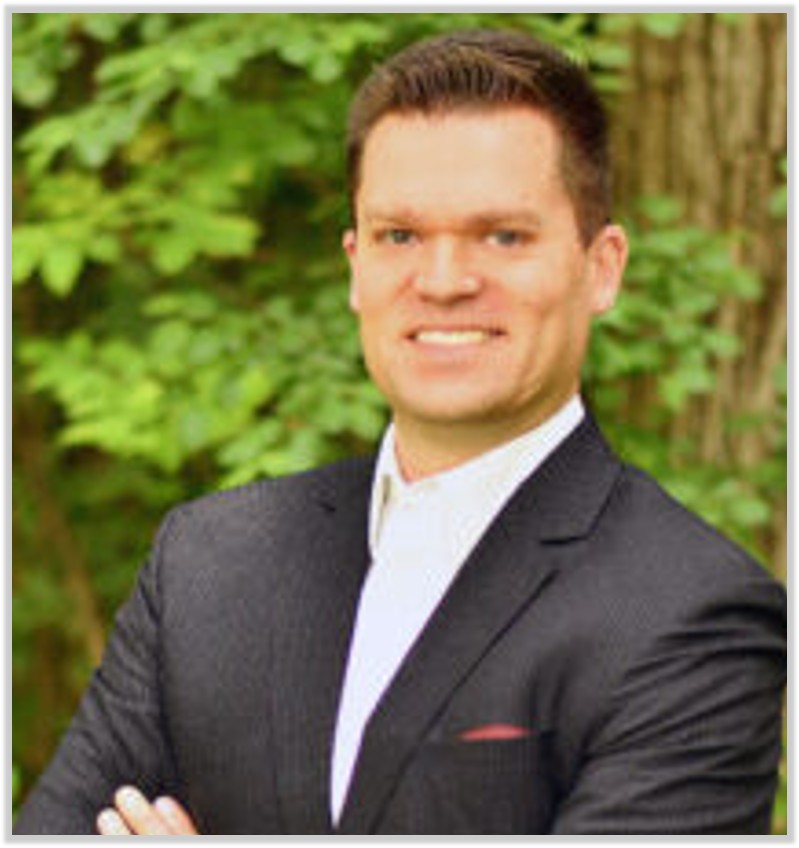
Steve Bowen is the Chief Science Officer at Gallagher Re, where he leverages his background in meteorology and passion for science to guide strategies on natural catastrophe risk, climate change, and sustainability. Transitioning from a career in television to the insurance industry in 2007, he also leads the Climate and Sustainability group within Gallagher Re, focusing on data analytics and advisory services to help clients navigate complex risks and regulatory demands. Steve collaborates with governmental agencies, academia, and industry groups, co-authoring scientific journals and speaking at high-profile events, including the White House and United Nations conferences.