The EPA has stopped calculating the health benefits of regulating air pollution. What does that mean for vulnerable communities?
May 15, 2026
by Maya Chari APM Research Lab Ten Across Data Journalism Fellow
In the early 2000s, the U.S. Environmental Protection Agency set out to define a metric that would allow policymakers to consistently calculate the benefits of reducing fatal risks: Value of a Statistical Life, or VSL. Their research resulted in a mean estimated VSL of $4.8 million (1990 U.S.D.) , or about $11.7 million, when adjusted for today’s inflation and wages. For the past two decades, this measurement has quietly decided Americans’ concrete legal protection from industrial environmental health risks– especially when it comes to air pollution.
Despite the name, VSL is not meant to assign a dollar value to the life of an individual. Rather, based on analysis of decades of behavioral and economic research, VSL represents the aggregate monetary value Americans place on incremental reductions in mortality risk across a population. For example, if 100,000 people were each willing to pay $110 for a reduction in a public mortality risk, the aggregate willingness to pay would be $11 million. If that reduction of risk added up statistically to one expected life saved, this would result in a VSL of about $11 million. This value can then be weighed against a proposed risk reduction’s impacts on industry and government.
In January of this year, however, the EPA announced that it will no longer measure the economic benefits of clean air regulation, citing uncertainty in modeling as justification for the change.
One irony of all this is that the uncertainties are only directed at the health impacts and not the economic impacts. So the uncertainty, I think, is a shield. Ultimately, there are clear costs of unhealthy air and they’re being borne by communities across the United States.
Air quality risks have been central to the agency’s mission since its inception, as they present a distinctive policy challenge. Many forms of economic activity, including transportation, energy production, manufacturing, agriculture, and other industries that play central roles in economic growth and daily life, produce air pollution. Toxins in the air can be extremely subtle and varied in nature while imposing outsized, long-term and often difficult-to-measure health harms.
All EPA regulations estimated to have over $100 million in economic impact are required to undergo a benefit-cost analysis. To this end, VSL has been part of a suite of tools the agency developed over decades to evaluate potential environmental regulation. In the case of air pollution analyses, an expert science panel convened by the EPA also created measurements more specific to the mortality risks of particulate pollution and, later, ozone exposure.
The American Lung Association’s 2026 State of the Air report demonstrates the implications of air quality monitoring. Will Barrett, the ALA’s head of policy, expresses skepticism about the EPA’s rationale for its recent latest change, pointing to decades’ worth of peer-reviewed scientific literature measuring the health effects of air pollution.
“One irony of all this is that the uncertainties are only directed at the health impacts and not the economic impacts. So the uncertainty, I think, is a shield,” said Barrett. “Ultimately, there are clear costs of unhealthy air and they’re being borne by communities across the United States.” He stressed that those communities more at risk tend to be those exposed to high levels of vehicle traffic, heavy industry and trucking routes, as well as gas-fired or coal plants.
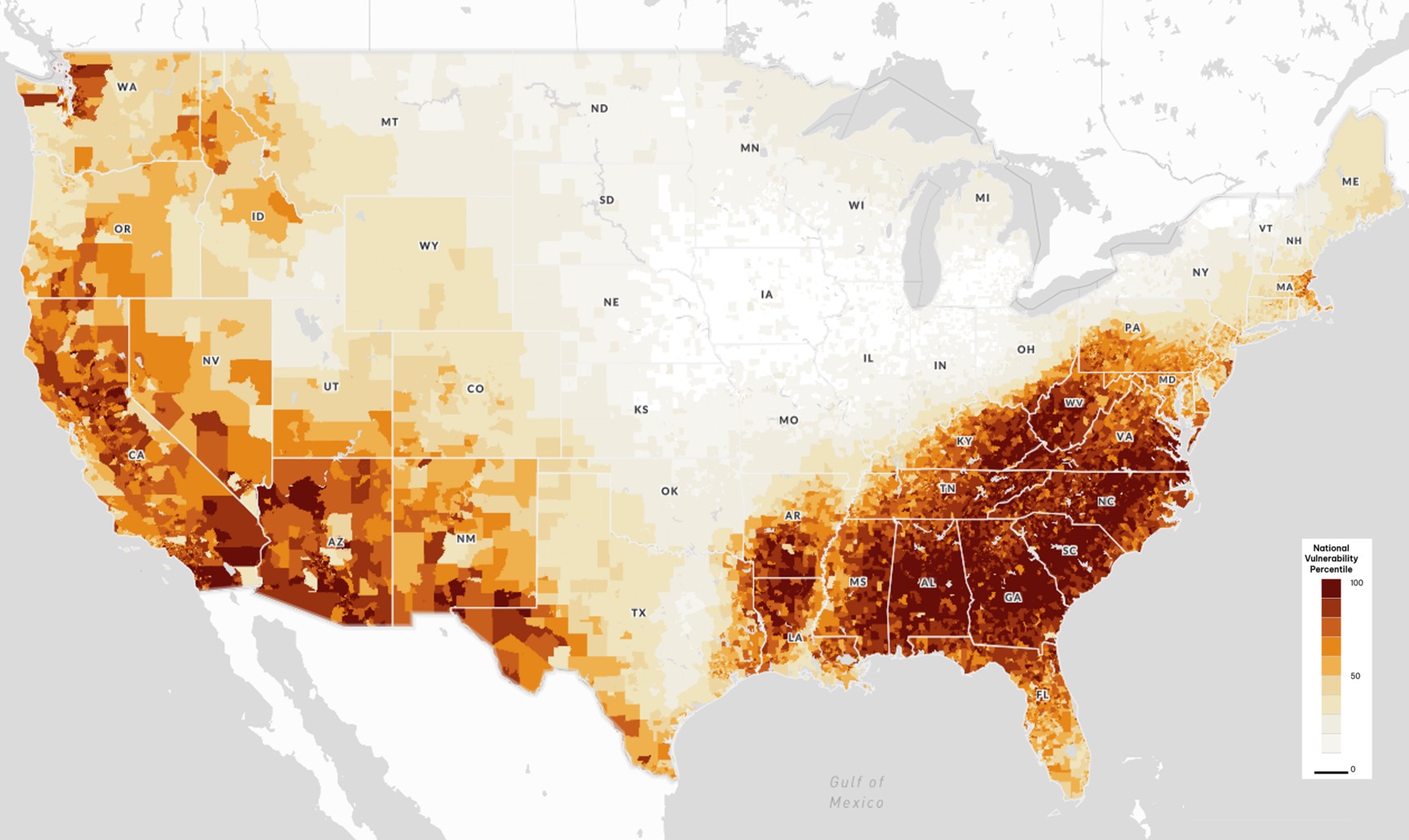
Many of the most vulnerable communities in the U.S. are located along the Interstate 10 corridor, one of the busiest transportation and shipping routes in the country, connecting major national hubs for industries closely associated with air quality trade-offs. Counties in Arizona, California and Texas have failed to meet the Clean Air Act’s standards for ozone, particulate matter and lead pollution, and the Gulf Coast is known both for widespread and concentrated hotspots of pollution from petrochemical activity. For places like these, the EPA’s withdrawal from economic analyses that support regulation is especially significant.
Barrett said that the changed benefit-cost calculations are already being used to repeal, weaken and delay emissions standards. This year, the EPA has rolled back new requirements that certain power plants reduce and monitor their particle, mercury and ethylene oxide emissions. It declined to implement tailpipe emissions standards that were projected to generate $13 billion dollars worth of health benefits annually. Barrett expects that the EPA will continue to move in favor of economic and industrial development with less attention to human health costs.
JoAnna Strother, senior director of advocacy at the ALA, said that if anything, she and her colleagues at the organization believe that, historically, the VSL metric has erred on the side of underrating the benefits of reducing air pollution. “There are a lot more health impacts of air pollution that just aren’t covered in current modeling,” she said. Many of these are unavailable to measure by VSL due to lack of cost-relevant research— including lung cancer onset and low birth weights.
In the absence of federal leadership, Strother said, it is important that state and local governments do not abdicate their own responsibility. Smaller-scale solutions that fall within local purview, including improvements around infrastructure and transit, can improve air quality and reduce pollution. In sprawling metro areas like Phoenix, Houston and Jacksonville, that might look like expanding transit routes, installing more charging stations for electric vehicles, building out renewable infrastructure for utilities and industrial facilities, and implementing sustainable building codes for warehouses and other structures. Heat also heavily contributes to ozone formation, which is another reason for Interstate 10 cities to model combatting the effects of extreme heat.
When it comes to addressing air pollution in a time of uncertain federal leadership, Strother said, state and local governments “need to make sure there’s a lot of tools in the toolbox.”
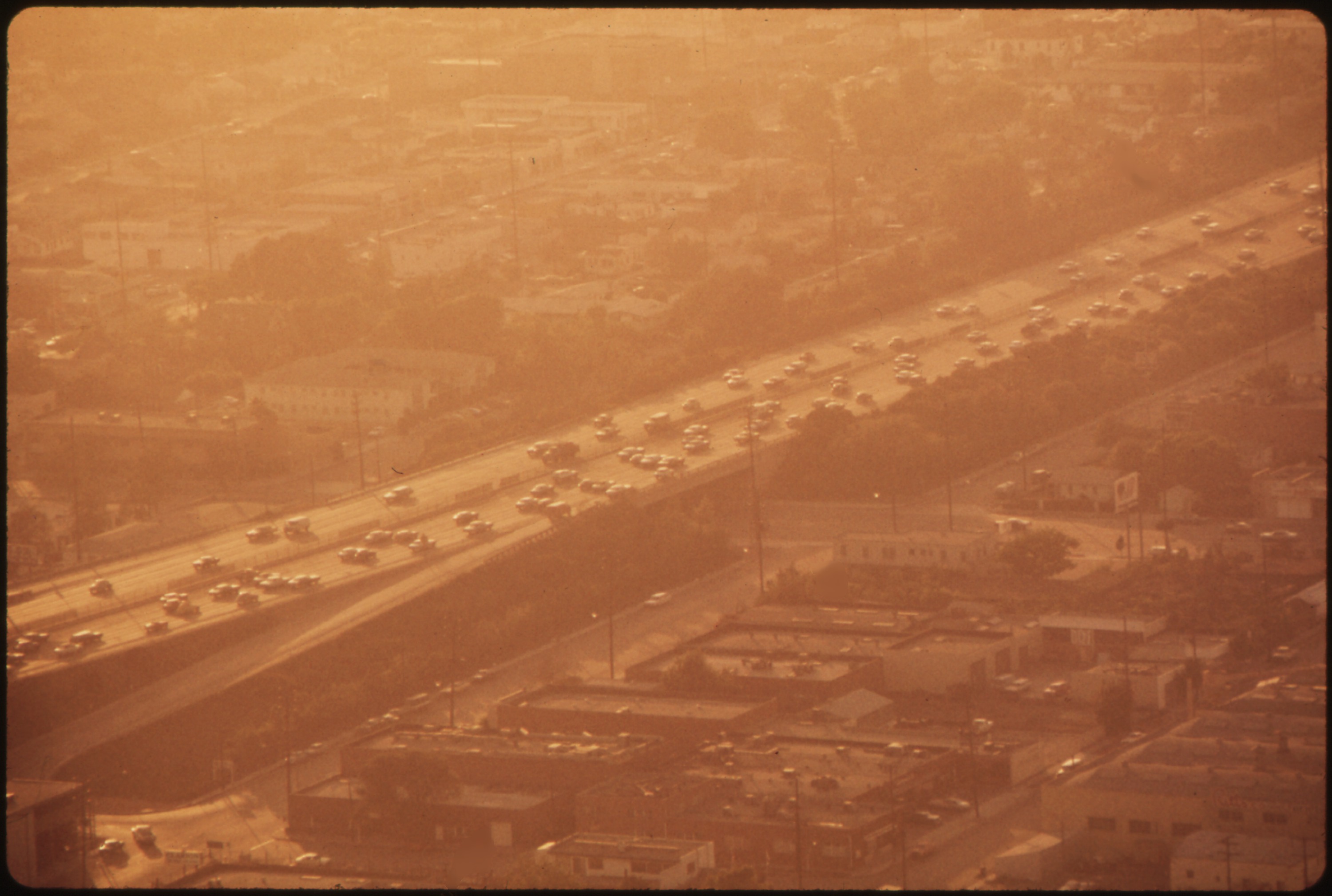
Cover image: West Los Angeles freeway, 1972. Gene Daniels for U.S. Environmental Protection Agency. Public domain via Wikimedia Commons.



_-_NARA_-_553020.jpg)