by Maya Chari
APM Research Lab Ten Across Data Journalism Fellow
Recent changes within the Department of Homeland Security (DHS) have reduced the federal government’s capacity for monitoring and addressing both extreme weather and environmental pollution.
Multiple agencies within DHS address extreme weather and other environmental threats. While the Federal Emergency Management Agency (FEMA) may be the best known among these for its involvement in highly visible disaster responses over many decades, since 2018 a younger related agency has held a somewhat quieter role. The Cybersecurity and Infrastructure Security Agency (CISA) was established during the first Trump administration, dedicated to safeguarding U.S. physical and digital infrastructure and serving at the primary federal agency for cybersecurity.
Over the past several years, CISA developed an extreme weather initiative, working with data from the National Oceanic and Atmospheric Administration (NOAA) to create policies and action plans for the protection of assets within its purview. The agency studied extreme weather’s impacts on energy and telecommunications, established standards for energy utilities’ equipment to ensure that they could operate under extreme heat conditions, and managed deployment of search and rescue teams.
CISA also operates an Office of Chemical Security, which identifies and monitors areas with high repositories of potentially harmful materials like fertilizer, propane and benzene, periodically inspecting these sites for safety and ensuring that they have adequate evacuation and emergency plans.
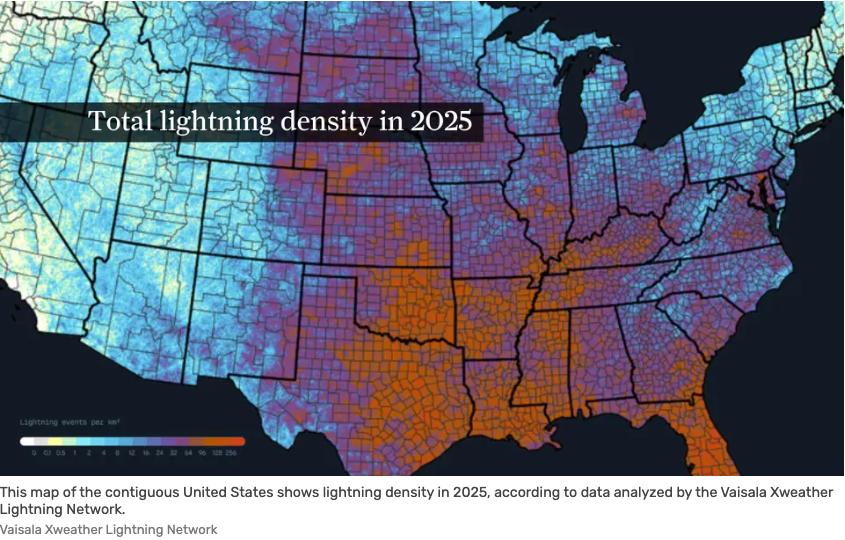
Southern states are especially vulnerable to the types of issues CISA studies. Nearly every state along the I-10 corridor is facing infrastructure strain due to extreme weather. Texas, Florida and Louisiana are among the states most vulnerable to lightning strikes. Storms are challenging water infrastructure in Florida and Mississippi. The city of Jackson has faced recurring water crises due to these issues. Hazardous chemical incidents resulting from extreme weather are also more common in the South.
Less than a decade after its founding and assumption of these areas of security oversight, CISA has become subject to the severe cutbacks of the second Trump administration. More than 130 employees were let go from CISA during the Department of Government Efficiency (DOGE)’s efforts to shrink the federal workforce in February 2025.
As an alternative to outright layoffs, many staff were reassigned under DHS to Federal Protective Services in Southern states. Federal Protective Services’ security-oriented scope relates to law enforcement, the protection and defense of buildings and spaces, an unlikely fit for most former CISA employees.While such job reassignments were optional, refusal carried higher risk of layoffs.
In March, federal judges issued a ruling requiring the rehiring of fired federal workers. However, it hasn’t been easy for CISA to resume its work. Contracts with vendors providing needed equipment had been cancelled. Repeated government shutdowns have also resulted in much of the agency’s staff being furloughed.
As a result, two of the agency’s main functions — conducting and publishing research on the infrastructure impacts of extreme weather and enforcing regulations around hazardous materials safety — have been compromised.
Sites identified by the Office of Chemical Security are no longer required to submit data that ensures that they are in compliance with safety standards. A report on lightning safety for crowded event venues, which was initially scheduled for release in summer 2025, was initially pushed to fall and eventually barred from release entirely. A guide to flood safety, meanwhile, was never completed after the entire team working on it was eliminated.
However, the former employee emphasized that federal cuts have not stopped this work entirely.
In many cases, it’s shifting to the private or nonprofit sectors. Just as many fired NOAA employees have taken their projects to organizations like Climate Central, former CISA employees are exploring different avenues to continue their work. In the meantime, they’re taking measures to ensure that the information gathered by the agency isn’t being lost.
“We’re all in different group chats trying to safeguard the data.”