by Maya Chari
APM Research Lab Ten Across Data Journalism Fellow
Mobile and manufactured homes are a critical source of affordable housing across the U.S. I-10 corridor, but aging units and intensifying heat leave many residents disproportionately vulnerable to fire and climate-related hazards.
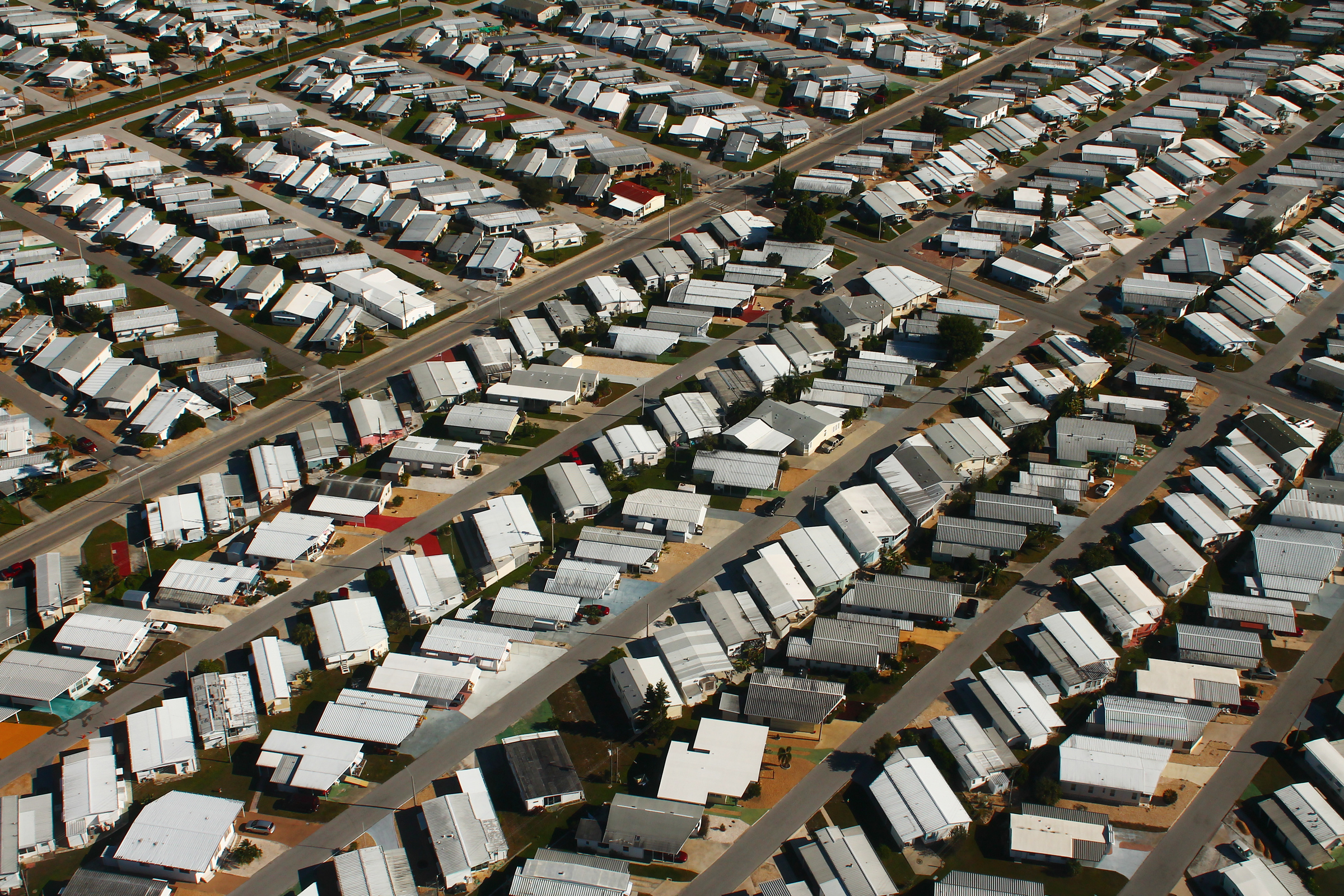
One in 15 Americans lives in a mobile or manufactured home. Manufactured housing makes up an especially significant part of the housing stock in states along the Interstate 10 corridor, a portion of the country stretching from California to Florida and facing some of the fastest growing environmental risks.
Of the ten cities with the largest shares of manufactured housing in the nation, nine are located in one of these southernmost states. Three of the top five cities are in Arizona: Tucson, Phoenix— and Mesa, which leads the country in manufactured housing stock with 29,300 mobile homes representing just over 13% of the city’s residential inventory. Florida cities are almost as highly ranked nationally for number of manufactured housing units.
Residents of manufactured or mobile homes tend to be older and lower-income. Both Arizona and Florida have outsized retirement-aged populations, and many of their mobile home parks are dedicated 55+ retirement communities. Housing costs have risen throughout the greater Sun Belt, the pandemic-era housing boom and the region’s ongoing population growth intensifying the crunch. At the same time, land costs have remained relatively low. This convergence can make operating a manufactured housing park — typically owned and managed by landlords who rent units or lots on the property to residents — financially profitable.
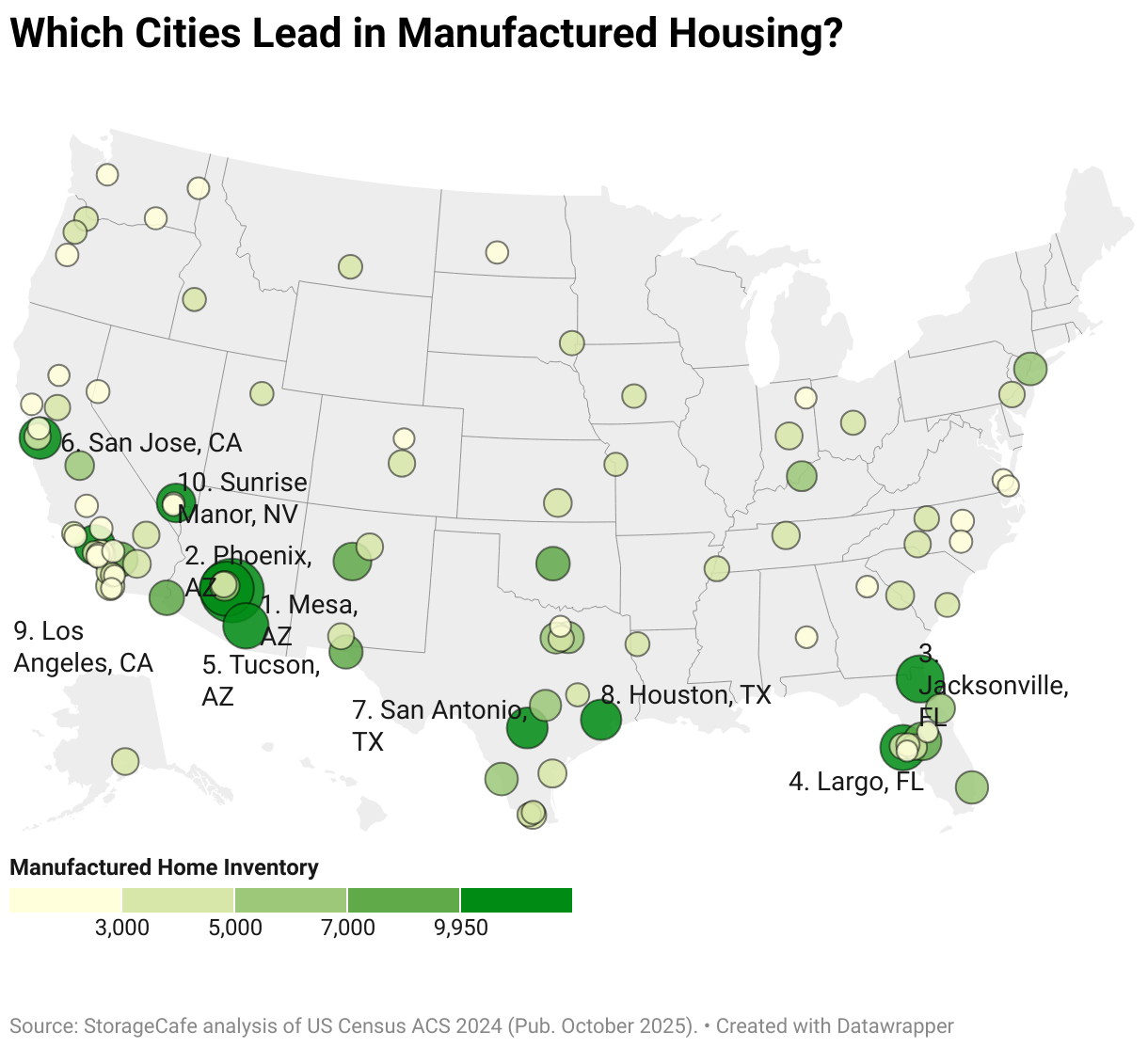
But while manufactured housing has the potential to provide affordable relief in communities with tight housing markets, residents often face heightened vulnerabilities during emergencies and natural disasters.
When considering the vulnerabilities inherent to this type of housing, it can be helpful to distinguish between “mobile homes” and “manufactured homes.” The terms are often used interchangeably, but the difference represents an awareness of inequitable risks. Mobile homes are those manufactured before the mid-1970s, while manufactured homes were constructed afterward in compliance with stricter national safety standards. In 1990, further standards around energy efficiency and weatherization were added, and the U.S. Department of Housing and Urban Development continues to add new compliance and safety standards.
The 1974 standards were in large part driven by a Center for Fire Research study which found that while residential fires aren’t necessarily more common in mobile homes than in other types of residences, they tend to be much deadlier. The way mobile homes were constructed caused fires to develop and spread much more rapidly and with deadlier results. The report’s recommendations included higher flammability safety ratings for construction materials.
Despite improved safety standards, data from the National Fire Incident Reporting System (NFIRS) shows that as recently as the early 2020s, fires in manufactured and mobile homes were still more dangerous than other residential fires. While modern manufactured homes have been found to be safer and more resilient than their older counterparts, millions of Americans still live in mobile homes that don’t meet the latest safety standards. As of 2023, around 7% of mobile and manufactured homes used as residences in the U.S. were built before 1969. The I-10 states of California, Florida, Texas and Arizona had the highest numbers of mobile homes that predate the improved 1970s regulations.
The popularity of manufactured housing among retirees likely also contributes to higher vulnerabilities. Older adults are statistically at disproportionate risk from home fires, accounting for 40% of all fire-related fatalities in 2015. In Mesa, Arizona, a relatively large percentage of mobile home fires result in casualties, according to NFIRS data.
Manufactured housing residents are, in fact, more vulnerable to nearly all climate risks, including extreme weather, storms and flooding. A study by the Urban Institute found that 80% of manufactured and mobile homes are located in areas exposed to one or more climate risks, as opposed to 20% of site-built housing.
The Sun Belt may be known most of all for one of the greatest safety risks facing many manufactured housing residents. Extreme heat is the deadliest weather-related hazard in the U.S., claiming more lives each year than all other natural disasters combined. The threat of heat has become so significant that it is a major focus of climate resilience work in southern states, and lawmakers from throughout the region have collectively urged the classification of extreme heat events as eligible for federal disaster relief under the Stafford Act.
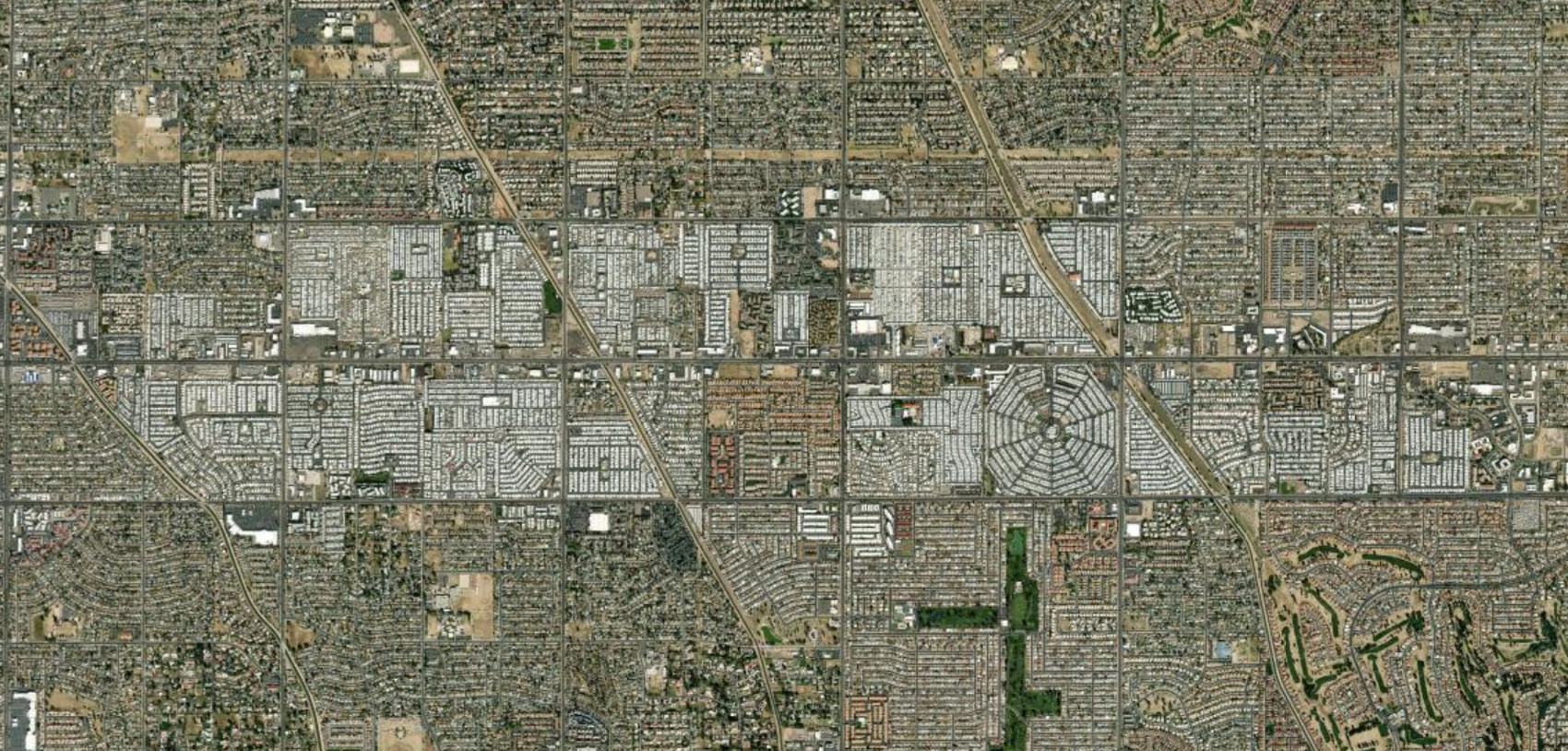
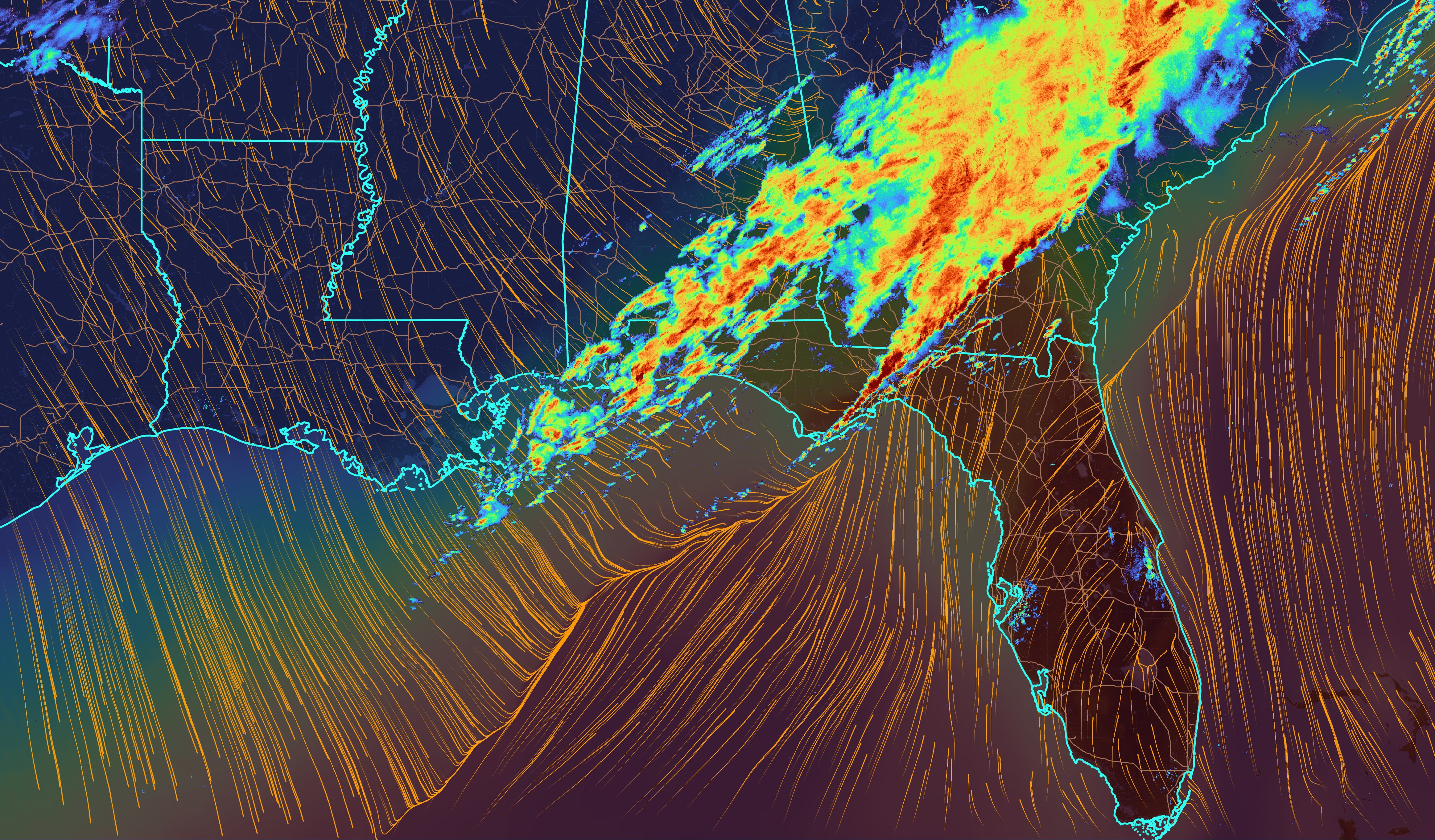
Image credit: Vantor via Esri ArcGIS
In Arizona’s heavily populated and notoriously hot Maricopa County, manufactured and mobile housing makes up only 5% of the overall housing stock, but residents of these homes represent 30-40% of the county’s deaths from heat each year. Researchers at Arizona State University and the University of Arizona have conducted research over the past decade to better understand such unequal risk.
Manufactured and mobile homes vary widely in construction quality. The research found that many units, especially those predating 1990’s improved standards, are so poorly sealed and insulated that the electricity to keep them cool becomes unaffordable for people with low or fixed incomes. And while utilities commonly offer energy assistance programs for those in need, the leasing structure of many manufactured housing parks means that residents are billed indirectly and do not qualify as customers of the utility.
In case after case, residents of mobile homes who died of heat-related illnesses had missing or broken air conditioners, or had their electricity shut off for non-payment.
Further research has focused on identifying not only the problems, but actionable solutions that may translate outside of the region, where extreme heat is less familiar and growing in severity. ASU has established a center dedicated to sharing and advocating for these solutions.
Investments in tree shade and awnings and replacements of leaky doors and windows can reduce the risk of heat-related illness and death for manufactured housing residents, but these interventions have often been prohibited by residents’ leases. In 2024, in large part as a result of the researchers’ work, Arizona passed a law guaranteeing residents’ right to install cooling measures in manufactured and mobile homes.
The researchers also recommend state investment in programs to repair and retrofit manufactured and mobile housing, and prohibit utility companies from shutting off residents’ electricity. “A third of indoor heat-associated deaths in the county are people who do have air conditioning and electricity and choose not to use it because they presume they can’t pay for it,” said Patricia Solís, executive director of the Knowledge Exchange for Resilience at Arizona State University. “There are still a lot of problems to solve.”
In 2019, the Arizona Corporation Commission began a moratorium on electric utilities disconnecting customers for non-payment during what are normally the hottest months of the summer. In April of this year, one of the state’s major utilities further agreed not to disconnect customers at any time of year when the temperature rises above 95 degrees.
Manufactured housing can offer one of the few remaining paths to attainable rents and homeownership in growing regions like the Sun Belt. As communities along the I-10 corridor grapple with rising real estate costs, they are challenged with ensuring that the affordability of manufactured housing does not come at the expense of safety, resilience and quality of life for the people who need these homes most.